If you live in Highlands Ranch, Littleton, Castle Rock or anywhere else in Douglas County, there is a good chance your yard sits on expansive clay soil. It is the reason so many local patios crack, walkways lift at one corner, pool decks go uneven and retaining walls start to lean after a few seasons.
Expansive clay soil is not a reason to skip the project you have in mind. It just means the ground has to be planned for before anything is built on it. In this guide we explain what this soil is, how it damages patios, walls and decks, how to tell if your yard has it, and the seven things we do on every job so the work stays steady for the long run.
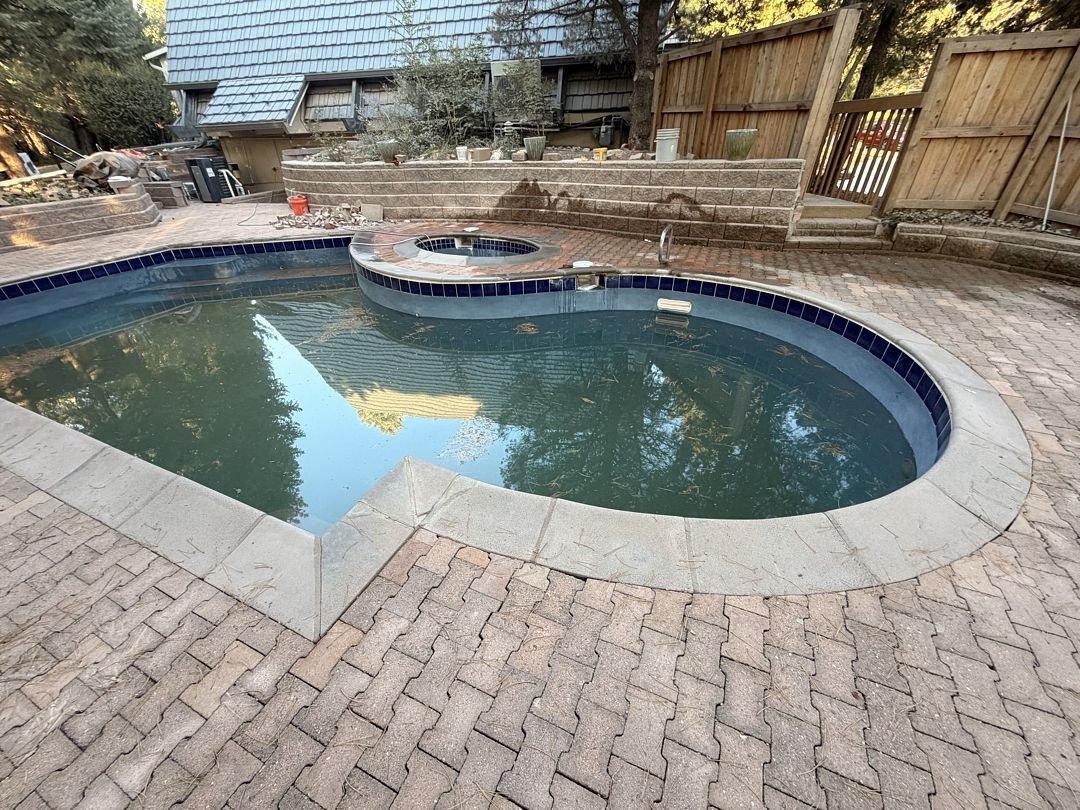
What Is Expansive Clay Soil?
Expansive clay soil contains clay minerals, mostly montmorillonite, which most people know as bentonite. These minerals are made of tiny flat plates. When the clay gets wet, water slips in between the plates and pushes them apart, so the soil swells. When it dries out, the water leaves and the soil shrinks again.
According to the Colorado Geological Survey, swelling soil causes more property damage in Colorado than any other natural hazard, and the Front Range and Douglas County are among the areas where it is most common. Natural soils can swell by up to half their volume, and the pressure behind that swelling is strong enough to lift concrete slabs and shift walls.
The key point is that expansive clay soil does not move once and stop. It moves every time its moisture changes, wetter in spring and after storms, drier in late summer and during dry winters. Anything built on top of it has to either ride that movement out or be kept away from it.
Why Douglas County Yards Are Hit So Hard
Much of the south Denver metro is built on soft, clay-rich bedrock and the soils that weathered out of it. The Colorado Geological Survey has mapped these conditions across north-central Douglas County, and in some areas the clay-bearing layers are tilted steeply close to the surface, which means the ground can move unevenly over short distances.
On top of that, our weather swings fast. A dry, sunny week followed by a heavy afternoon storm, a big snow melt in March, or a sprinkler zone that runs too long all change how wet the clay is. New neighborhoods add another layer, since lots are graded and backfilled during construction and the soil around a new home can keep settling and moving for years.
Every time that moisture changes, expansive clay soil moves a little. One wet spring will not ruin a patio. Years of uneven wetting and drying under one side of it will.
Swelling Clay vs Settling Soil
Not every crack or dip comes from swelling clay. Settling is a different problem with a different fix, and it is worth knowing which one you are looking at.
| Swelling clay | Settling soil | |
|---|---|---|
| What happens | The ground pushes up when it gets wet and drops back when it dries | Loose or poorly compacted soil sinks under the weight on top of it |
| Where you see it | Slabs lifting, walls pushed outward, cracks that open and close with the seasons | Low spots, slabs tipping toward the house, gaps opening under steps |
| Common cause | Water reaching clay unevenly from downspouts, sprinklers or poor grading | Backfill around a newer home that was never properly compacted |
| The fix | Control the water and build on a base that keeps the clay at a distance | Remove the soft material and rebuild on a properly compacted base |
In practice many yards have a bit of both, which is why we look at the drainage and the base together rather than treating a crack on its own.
How Clay Soil Damages Patios, Walls and Decks
The damage usually shows up in the same handful of ways. Knowing them helps you spot an early problem before it turns into a full rebuild.
| Project | What you might notice | What is really going on |
|---|---|---|
| Concrete patios and walkways | Cracks, one slab sitting higher than the next, water pooling | The clay under one part of the slab swelled more than the rest |
| Paver patios | Pavers rocking, humps or dips, joints opening up | The base was too thin, so soil movement reached the surface |
| Pool decks | Pavers lifting near the coping, uneven edges, gaps along the pool | Water from the pool area keeps the clay underneath wet on one side |
| Retaining walls | Leaning, bulging, cracked caps, blocks pushed out | Wet clay behind the wall swelled and pressed against it with no drainage to relieve it |
| Deck footings | Uneven boards, gaps at the house, sticking gates | Shallow footings sat in the zone where the clay keeps moving |
| Steps and edging | Steps pulling away from the house, edging lifting | Small, lightly loaded pieces get lifted first |
Concrete and pavers react differently. A concrete slab is one rigid piece, so when the clay pushes on part of it, it cracks. Pavers are separate units on a flexible base, so they can move a little without breaking, and if an area does lift, those pavers can be taken up, the base fixed and the same pavers set back down. That is one reason many homeowners on clay choose pavers for patios and pool decks.
Signs Your Yard Has Expansive Clay Soil
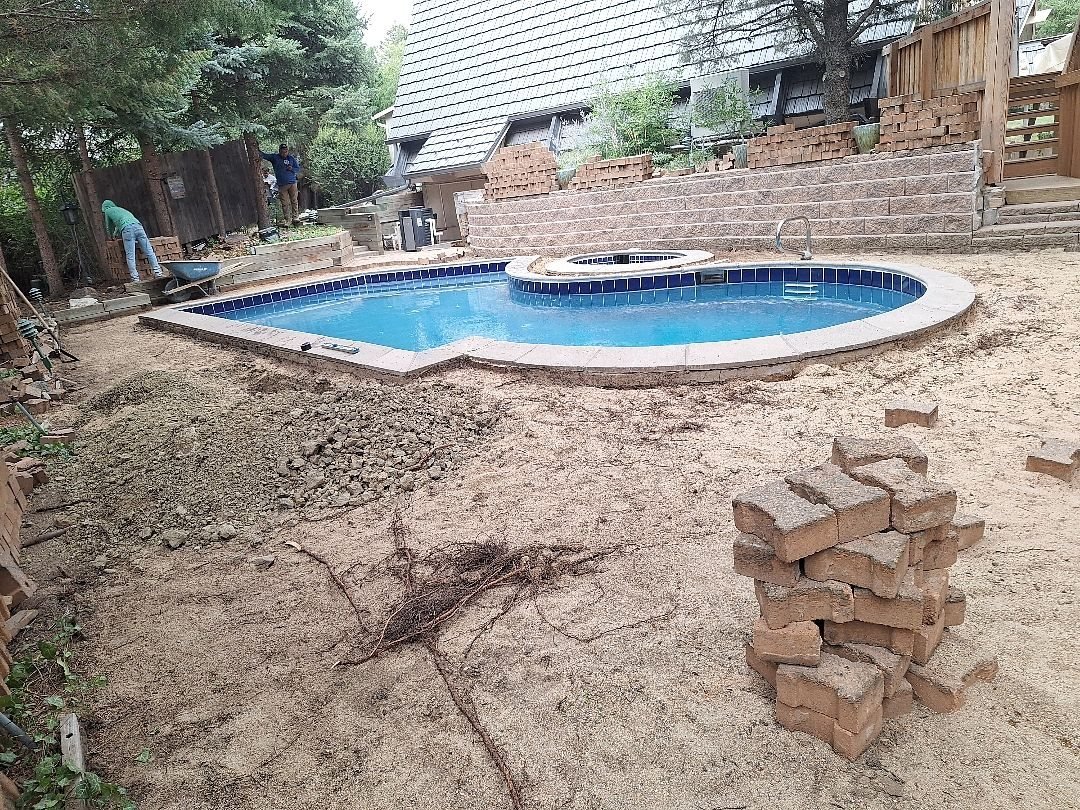
You do not need a lab test to get a good idea. In summer, clay soil dries hard and opens up in wide cracks across bare ground and lawn edges. After rain it turns sticky and slick, clings to boots and tools, and water sits on top for hours instead of soaking in. Plants struggle in low spots where water pools, and you may notice gaps opening between the soil and your foundation in dry spells.
Around the hardscape, look for hairline cracks in patios that come back after being patched, doors and gates that stick in some seasons and not others, and any wall that looks slightly less straight than it did a few years ago. Any one of these on its own is not alarming, but two or three together usually mean the clay is active.

7 Ways We Build for Expansive Clay Soil
None of these steps are exotic. They are what good base work looks like on the Front Range, and skipping them is the most common reason projects on clay fail early.
1. Look at the ground before anything is designed
Every project starts with an onsite visit. We look at how the yard drains, where the downspouts land, which areas stay soggy and what has already cracked or shifted. That tells us how much the expansive clay soil is likely to move and where it matters most, and it shapes the design before a single stone is ordered.
2. Dig out and replace the weak top layer
Under a paver patio or a concrete slab, we remove the soft clay at the surface and replace it with a compacted aggregate base. The base spreads the load and gives the clay below room to move without pushing straight up into the surface. On clay we plan for a deeper base than we would on sandy, well-drained ground.
3. Compact in thin layers
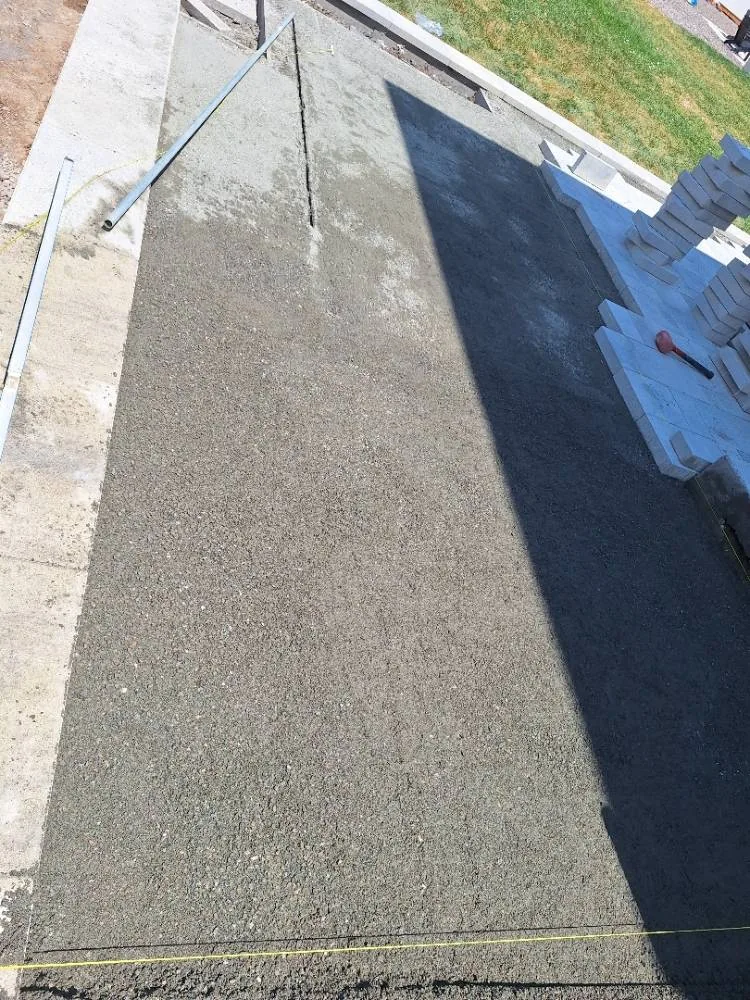
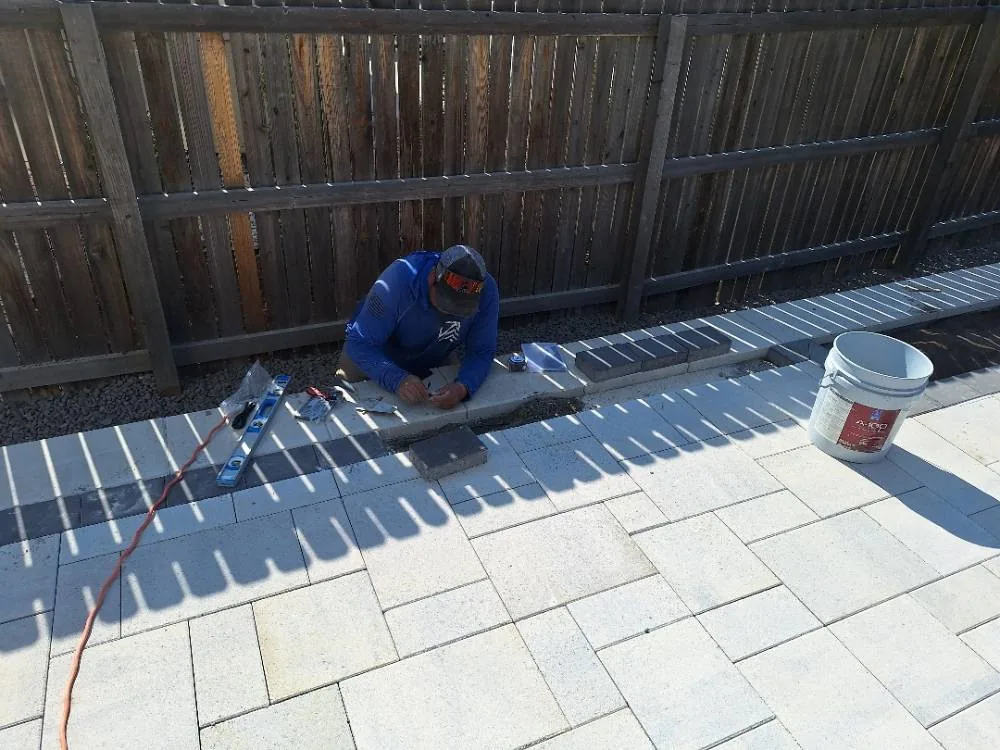
A thick base dumped in one go settles unevenly. We build it up in thin layers and compact each one, which is slower but is what keeps a patio flat. Edge restraints then hold the outer pavers in place so the field cannot creep outward over time.
4. Give water somewhere to go
Water is what makes clay swell, so drainage matters more than anything else. We slope patios away from the house, keep downspouts off the clay next to slabs and walls, and add drain pipe and gravel where the yard holds water. Where a yard stays soggy no matter what, a French drain can carry the water away before it soaks in.
5. Drain every retaining wall
Behind every retaining wall we build there is clean gravel backfill and a perforated drain pipe that carries water out. Without it, wet clay swells against the back of the wall and pushes it over time. Taller walls, or walls holding up a driveway or structure, may need an engineered design. If you are still choosing a wall type, our guide to the best material for a retaining wall covers how each one handles soil pressure.
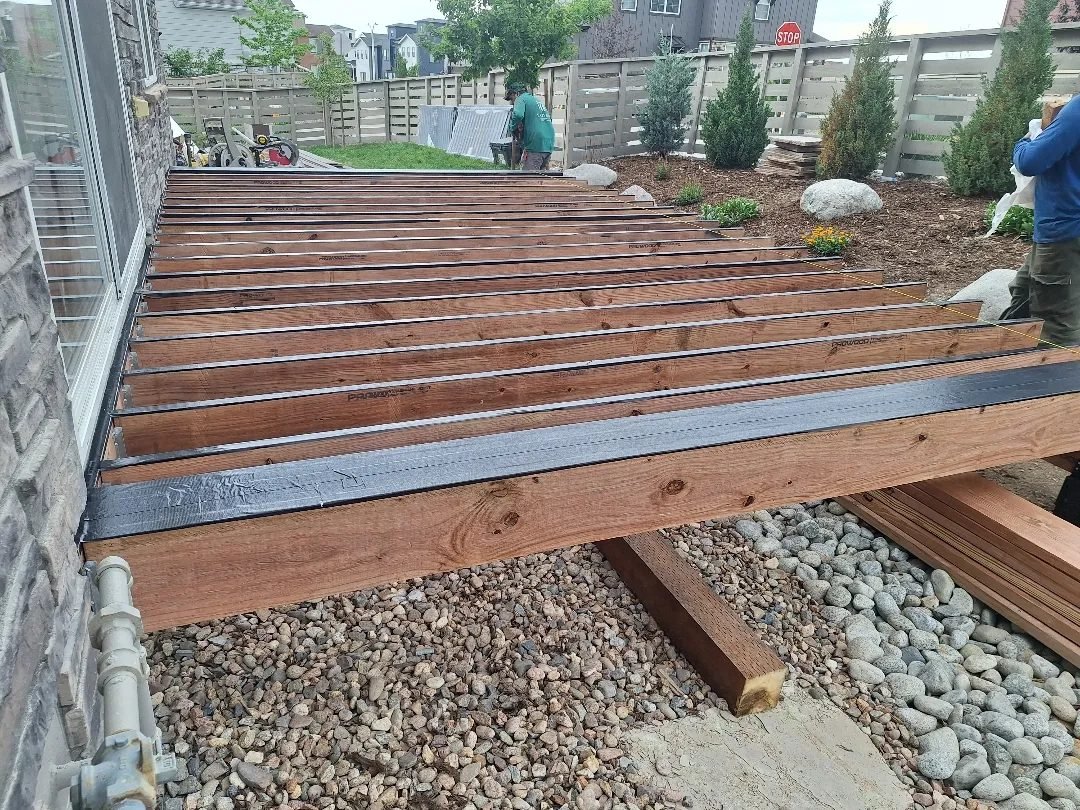
6. Set deck footings below the active zone
For composite decks, the footings go deep enough to sit below the layer of clay that keeps wetting and drying, and they are sized to the load and inspected before the frame goes on. That keeps the frame level while the soil near the surface moves around it. Our guide to getting a permit for deck construction explains where the footing inspection fits in.
7. Plan the planting and watering
Thirsty plants and spray heads right against a patio or wall keep the clay wet on one side. We keep heavy watering back from hardscape edges and lean toward water-wise planting, which also fits the ideas in our guide to xeriscaping in Colorado.
What You Can Do Right Now
Even if your patio or wall is already built, a few simple habits make a real difference. Check that your downspouts drain several feet away from slabs and walls, and add an extension if they do not. Watch your sprinklers so they are not soaking the ground beside concrete or blocks, and turn zones down in the cooler months when the ground dries slowly.
After a big storm, notice where water sits for more than a day, because those are the spots where the clay is moving most. Keep an eye on cracks too. A crack that stays the same width is usually cosmetic. A crack that keeps getting wider, or a slab edge that keeps rising, is telling you the clay underneath is still active.
If you already see cracks wider than a pencil line, blocks pushing out of a wall or a patio that has started to tip toward the house, it is worth having it looked at before winter freeze and spring snow melt make it worse.
Questions to Ask Before You Build on Clay
Whoever you hire, a few questions will tell you quickly whether they have planned for the ground. Ask what goes under the patio and how it is compacted. Ask where the water from your roof and yard will go once the project is finished. For a wall, ask what is behind it and where the drain pipe comes out. For a deck, ask how deep the footings go and when they are inspected. Clear, specific answers are a good sign. Vague ones usually mean the base is an afterthought.
Expansive Clay Soil FAQ
Can you build a patio on expansive clay soil?
Yes. Most patios in Douglas County are built on it. The difference between a patio that lasts and one that cracks is the base under it and how well water is kept away from it.
Are pavers or concrete better on clay?
Both can work. Pavers handle small movement better because they flex as separate units and can be lifted and reset if needed. Concrete is a single slab, so it relies even more on a good base and well-placed control joints to manage cracking.
Will a retaining wall on clay always lean eventually?
No. Walls lean when water builds up behind them and the clay swells. A properly built base, gravel backfill and a working drain pipe keep that pressure off the wall.
Is winter a bad time to plan a project?
Winter is the best time to plan. You can have the onsite visit, settle the design and get any approvals in order, so the build is ready to start as soon as the ground allows in spring.
Planning a Spring Project on Clay Soil
Spring is when most homeowners want their patio, wall or deck finished, and it is also when the schedule fills fastest. Planning over the winter gives time for an onsite visit, a design that accounts for your soil and drainage, and any HOA or permit approvals. Our guide to concrete patios in Highlands Ranch is a good place to start if you are weighing surfaces.
Wrap-up
Expansive clay soil is part of life in Douglas County, but it does not have to mean cracked patios, uneven pool decks and leaning walls. With the right base, proper drainage and footings set below the moving layer, outdoor projects here can stay solid for many years.
Every yard is different, and the only way to know how your soil will behave is to look at it in person. Call Elevate Landscape & Spas at (303) 718-4619 to book an onsite visit and get a quote, or contact us online.
Rather We Call You?
Leave your name and number and we’ll call you back — usually the same day. Or call us now on (303) 718-4619.
Rather write it down?
✎ Send us your project details


One thought on “Expansive Clay Soil in Highlands Ranch: 7 Smart Ways to Protect Your Patio and Walls”