Looking for a paver patio contractor in Highlands Ranch or the south Denver metro? Elevate Landscape & Spas designs and builds paver patios, walkways, fire pit areas and pool surrounds. Every patio we build starts with the part you never see: a base made for Colorado’s clay soil and freeze-thaw winters.
Pavers are a great surface for a Front Range backyard, but only when they’re laid on the right foundation. This page explains why pavers suit our climate, what a proper base looks like, the design choices worth thinking about, and what to expect when you work with us as your paver patio contractor.
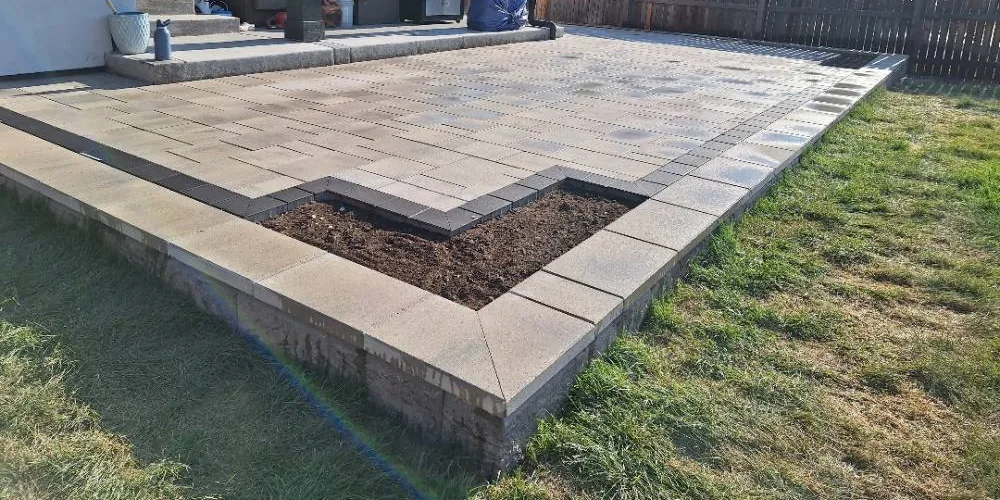
Why pavers work so well in Colorado
A poured concrete slab is one solid piece. When the ground under it freezes, thaws and shifts, which it does every winter here, the slab has nowhere to go and it cracks. A paver patio is hundreds of individual units locked together with sand. The surface can flex slightly with the ground instead of breaking. That’s why, as a paver patio contractor, we recommend pavers for most Colorado patios.
- Freeze-thaw tolerance. The joints give the patio room to move, so a cold snap doesn’t leave a crack across the middle.
- Repairable. If a section settles or a utility line needs digging up, the pavers come out and go back in. A cracked slab has to be cut out and patched.
- Strong. Concrete pavers are dense, factory-made units designed to handle foot traffic, furniture, hot tubs and even vehicles on a driveway.
- Design range. Shapes, sizes, colors and laying patterns give you far more options than a plain gray slab.
Comparing surfaces? Our guides to concrete patio options and resin-bound stone cover the alternatives, and deck vs. patio helps if you haven’t decided between the two.
The base is what makes or breaks a paver patio
Almost every failed paver patio has the same story: the pavers were fine, the base wasn’t. Much of the south metro sits on expansive clay that swells when wet and shrinks when dry. Lay pavers on a thin layer of sand over that clay and the patio will dip, rock and grow weeds within a few seasons. Here’s how a careful paver patio contractor builds it instead:
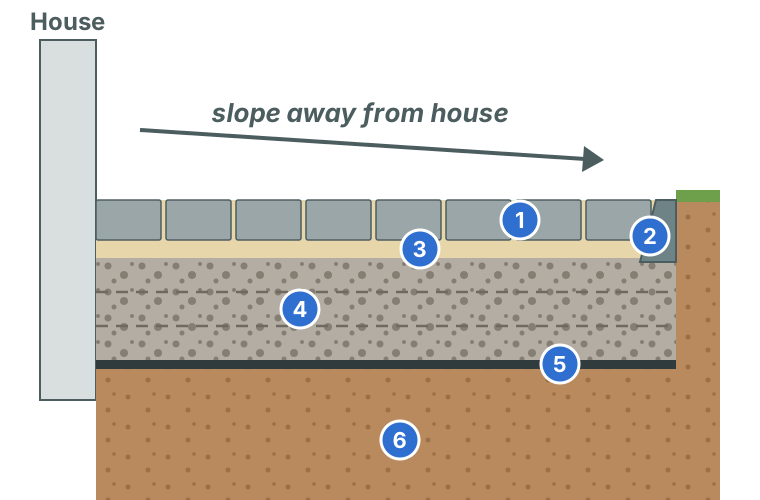
- Pavers: joints locked with polymeric sand
- Edge restraint: stops the edges creeping outward
- Bedding sand: a thin, screeded, level seat
- Crushed base rock: compacted in thin layers (lifts)
- Geotextile fabric: keeps the base rock out of the clay
- Native clay soil: swells and shrinks with moisture
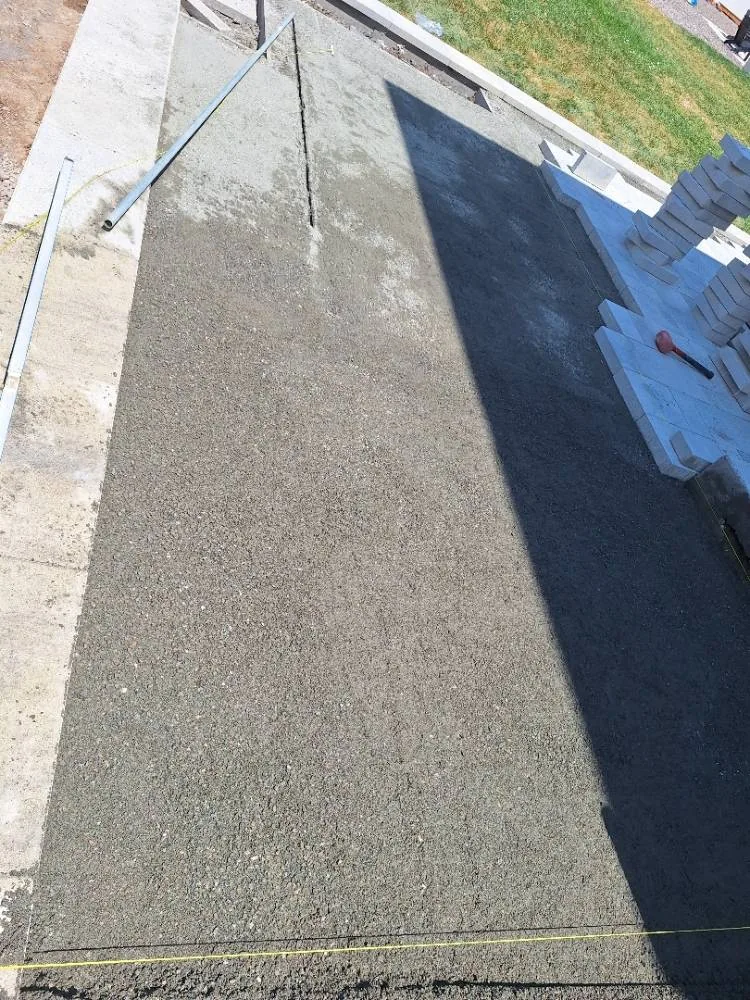
- Excavate deep enough. We dig out the soft topsoil and organic material, going deeper where the patio will carry a hot tub, a grill island or vehicle traffic.
- Separate the soil. Where the clay is poor, a geotextile fabric keeps the base stone from pressing down into it over time.
- Build and compact the base in layers. Crushed base rock goes down in thin lifts, each one compacted with a plate compactor. Dumping it all in at once and compacting the top is the most common shortcut, and the one that causes sinking later.
- Set the slope. The patio is graded to shed water away from the house, so meltwater and storm runoff don’t sit against your foundation.
- Screed a bedding layer. A thin, even layer of bedding sand gives the pavers a level seat.
- Lay, cut and restrain. Pavers are laid in the chosen pattern, edges are cut clean, and a solid edge restraint holds the perimeter so the field can’t creep outward.
- Lock the joints. The surface is compacted again and the joints are filled, usually with polymeric sand that hardens to resist washout, weeds and ants.
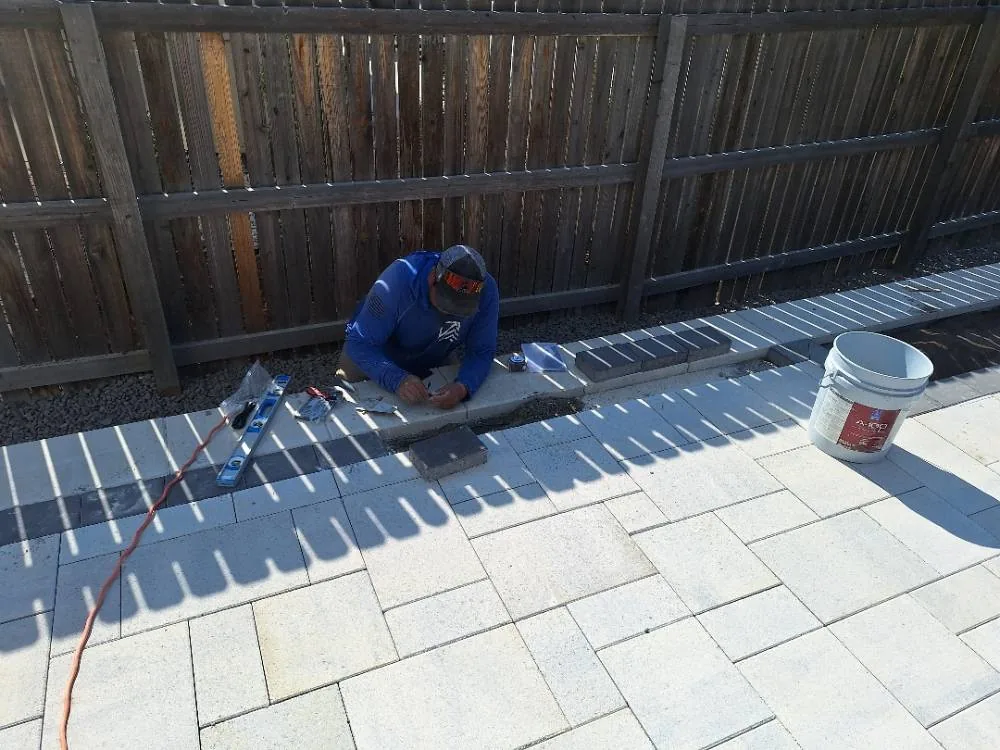
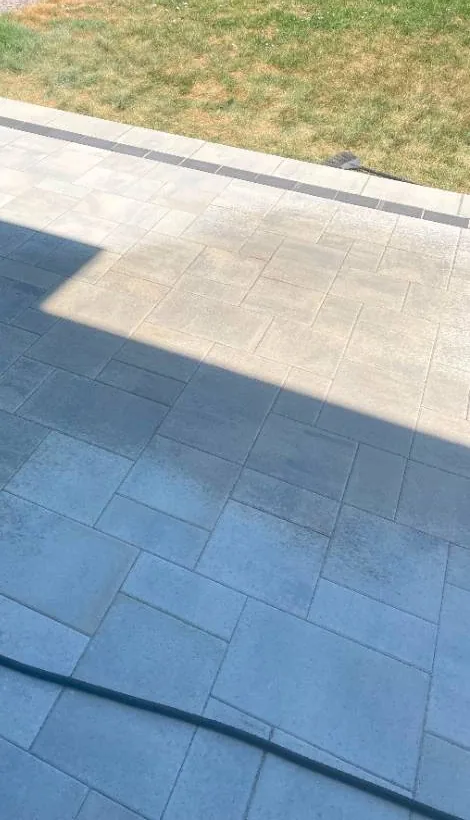
None of those steps are visible once the patio is finished, which is exactly why they get skipped. It’s the main thing that separates a paver patio contractor whose work still looks flat in ten years from one whose work doesn’t.
Paver patio design ideas
A good design makes a patio feel like an outdoor room rather than a slab of hard surface. Things a paver patio contractor should help you plan:
- Laying patterns. Herringbone is the strongest pattern for driveways and busy paths; running bond and random multi-size patterns suit relaxed patios.
- Borders and banding. A contrasting soldier course around the edge frames the patio and makes the edge stronger.
- Fire pit areas. A round or square fire pit set into the patio, with seating space around it sized for how many people you host.
- Seat walls and steps. Low walls double as extra seating and help manage a sloped yard.
- Walkways. Paver paths that connect the patio to a gate, a side yard or a deck.
- Pool surrounds. Lighter, textured pavers around a pool stay cooler and give better footing when wet.
- Permeable pavers. Wider joints filled with stone let water soak through, which can help in spots where runoff is a problem.
relaxed look for patios
strongest for driveways and paths
a dark band frames the field
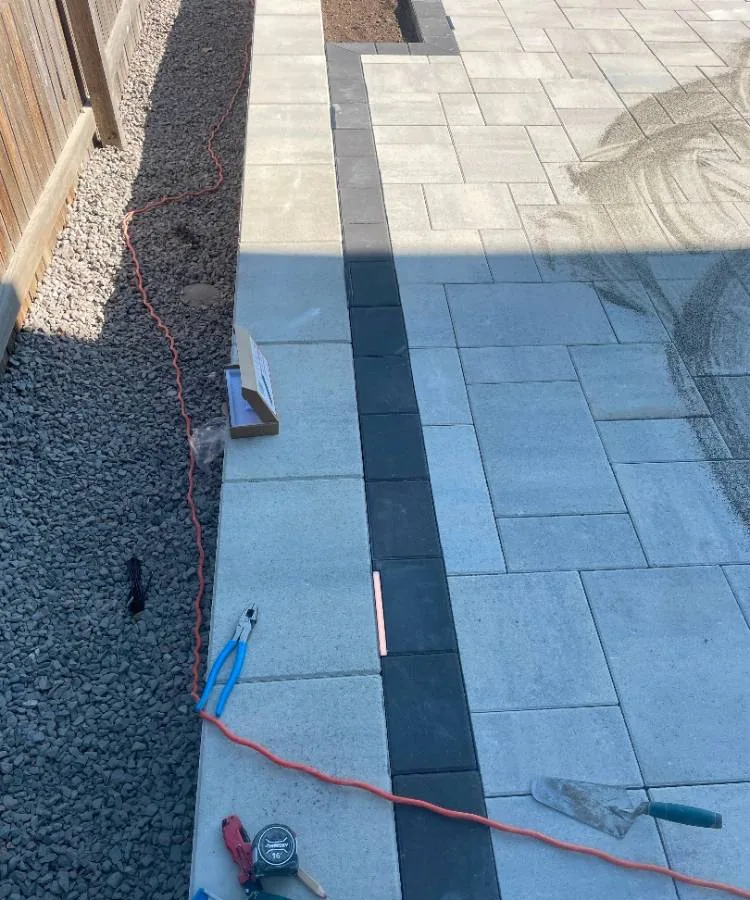
We work with established paver manufacturers, including Belgard, and bring samples to your home so you can see colors in your own light. Colorado sun makes most colors look lighter outside than they do on a display board.
Paver pool decks and outdoor living
Pavers are one of the best surfaces around a pool or hot tub. They give good footing when wet, lighter colors stay cooler for bare feet, and a cracked section can be replaced without breaking up the whole deck. Because we build pools as well as patios, we plan the paver surround, the coping and the drainage as one job, so splash water runs away from the pool and the house instead of under the pavers.
The same goes for the rest of the yard. A paver patio often sits below a deck, beside a pergola or around a fire pit and seating area. As a paver patio contractor that also builds decks and pools, we can design the levels, steps and drainage so every part of the outdoor space connects.
Pavers on sloped yards
Many Highlands Ranch, Castle Rock and Littleton lots slope away from the house, so a flat patio often needs a wall to hold the ground. A paver patio and a retaining wall have to be planned together: the wall supports the patio’s base, and both need drainage behind and beneath them. Because we build retaining walls and French drains ourselves, the patio, wall and drainage are designed as one job by one team. Hiring a paver patio contractor and a separate wall builder is where a lot of these projects go wrong.
HOA approval in Highlands Ranch
In Highlands Ranch, the HRCA says all exterior home improvements need approval from its Architectural Review Committee, and approval is required even for like-for-like replacements. The HRCA has up to 30 days to decide, and some neighborhoods also have a sub-association review. You can read the HRCA’s process on its covenants and improvements page.
As your paver patio contractor, we prepare the drawings, paver selections and materials list your HOA asks for, so approval doesn’t hold up the start date. Building permits depend on the project and your address. A simple patio at ground level usually doesn’t need one, but walls, covered structures and some drainage work can, and we’ll tell you on the site visit.
What affects the cost of a paver patio
Every yard is different, so as a paver patio contractor we price each project after seeing the site. These are the things that move the number most:
- Size and shape. Curves and lots of cuts take more labor than a simple rectangle.
- The paver you choose. Premium textures and large-format slabs cost more than standard pavers.
- Base depth and soil. Poor clay, a hot tub pad or a driveway all call for a deeper, stronger base.
- Slope. A sloped yard may need steps, seat walls or a retaining wall.
- Access and removal. Tight side yards and removing an old slab or failed patio add time.
- Extras. Fire pits, borders, walkways and drainage.
The quickest way to a real number is a visit: call (303) 718-4619 and we’ll come out, measure and talk through options.
How we work as your paver patio contractor
- Site visit. We look at the soil, slope, drainage and access, and talk through how you want to use the space.
- Design and written quote. Layout, paver selection, base and any walls or drainage spelled out clearly.
- HOA paperwork. We put together what your association needs and submit early.
- Build. Excavation, base, pavers and joints, with the site cleaned up at the end of every day.
- Walkthrough. We go over the finished patio with you, including how to care for it through winter. A good paver patio contractor leaves you knowing how to look after it.
Caring for pavers through a Colorado winter
- Shoveling. A plastic shovel or one with a rubber edge is gentlest on the surface and the joints.
- Ice melt. Use a de-icer your paver manufacturer approves, and avoid fertilizer-based products, which can damage concrete pavers.
- Joints. Top up joint sand if you see gaps opening, usually after a few years. It keeps the pavers locked and weeds out.
- Sealing. Optional, and something to ask your paver patio contractor about. A sealer can deepen color and make stains easier to clean, especially around grills and pools.
More than a paver patio contractor
A new patio is often part of a bigger change to the yard. We also build decks, inground pools, retaining walls, French drains and aluminum pergolas, so a patio below a deck, a paver pool surround or a terraced patio on a slope can all be planned and built by one team. See our full landscape construction services. We work across Highlands Ranch, Littleton, Lone Tree, Centennial, Parker and Castle Rock.
Frequently asked questions
Are pavers better than concrete in Colorado?
For most patios, yes. A concrete slab is one piece, so freeze-thaw movement tends to crack it. Pavers are individual units that can flex slightly with the ground, and a settled section can be lifted and relaid instead of cut out and patched.
Why do paver patios sink?
Almost always because of the base. Thin base rock, poor compaction, no fabric over clay soil, a missing edge restraint, or water draining onto the patio can all let pavers settle. That is why we build the base in compacted layers and plan the drainage with the patio.
Why are weeds growing between my pavers?
Usually the joint sand has washed out or was never locked in. On the patios we build, the joints are filled with polymeric sand, which hardens once it is wetted, so weeds and ants have a much harder time getting through.
Should I seal my pavers?
It is optional. A sealer can deepen color and make grease, wine and pool chemical stains easier to clean. It needs renewing every few years, so we talk through whether it is worth it for how you use the patio.
Do you install pavers around pools?
Yes. Because we also build pools, we plan the paver surround, the coping and the drainage together. Lighter, textured pavers stay cooler and give better footing when wet.
Do you install permeable pavers?
Yes. Permeable pavers have wider joints filled with stone so water soaks through instead of running off. They suit spots where runoff is a problem, but they need the right base below them, which we check on the site visit.
Can pavers go over my old concrete patio?
Sometimes. If the slab is sound, level and drains away from the house, thin pavers can be laid over it. If it is cracked, heaving or holds water, it is better to remove it and build a proper base.
Do I need HOA approval for a paver patio in Highlands Ranch?
Usually, yes. The HRCA says all exterior home improvements need approval from its Architectural Review Committee, including like-for-like replacements, and it can take up to 30 days. We prepare the drawings and materials list for you.
How long does a paver patio take to build?
Most residential patios take a few days to two weeks of build time, depending on size, base depth, slope and extras like fire pits or walls. HOA approval can add time before we start.
Can you build a paver patio in fall or winter?
Fall is a good time to build, as long as the ground is not frozen. In deep winter we usually do the design and HOA approval so your patio is first in line for spring.
What ice melt is safe for pavers?
Use a de-icer your paver manufacturer approves and avoid fertilizer-based products, which can damage concrete pavers. Clear snow with a plastic or rubber-edged shovel to protect the surface and joints.
How much does a paver patio cost?
It depends on size, the paver you choose, the base your soil needs, slope, access and extras. Every yard is different, so we give an exact quote after an on-site visit. Call (303) 718-4619 to set one up.
Talk to a paver patio contractor in Highlands Ranch
Whether you want a new patio, a fire pit area, a paver pool surround or a new patio to replace an old one that’s sinking, the first step is a visit. Call (303) 718-4619 and we’ll come out, look at the ground and give you a clear written quote.
Rather write it down?
✎ Send us your project details
Rather We Call You?
Leave your name and number and we’ll call you back — usually the same day. Or call us now on (303) 718-4619.