Retaining Wall Contractor in Highlands ranch
Finding a retaining wall contractor in Highlands Ranch is easy enough. Finding one who builds a wall that is still straight in ten years is a different matter, because almost everything that determines it sits behind the wall where nobody looks.
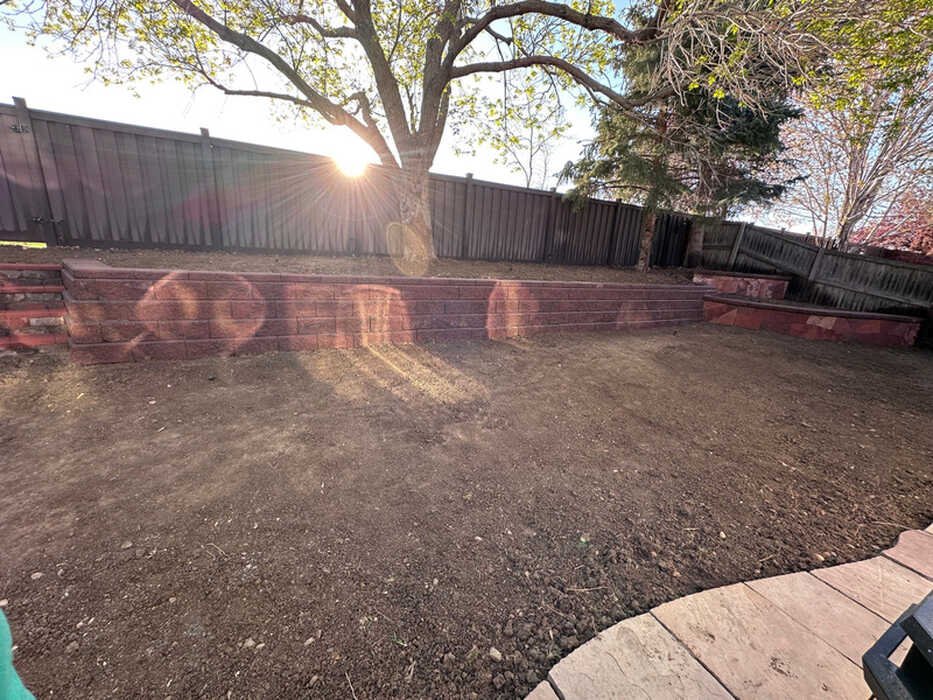
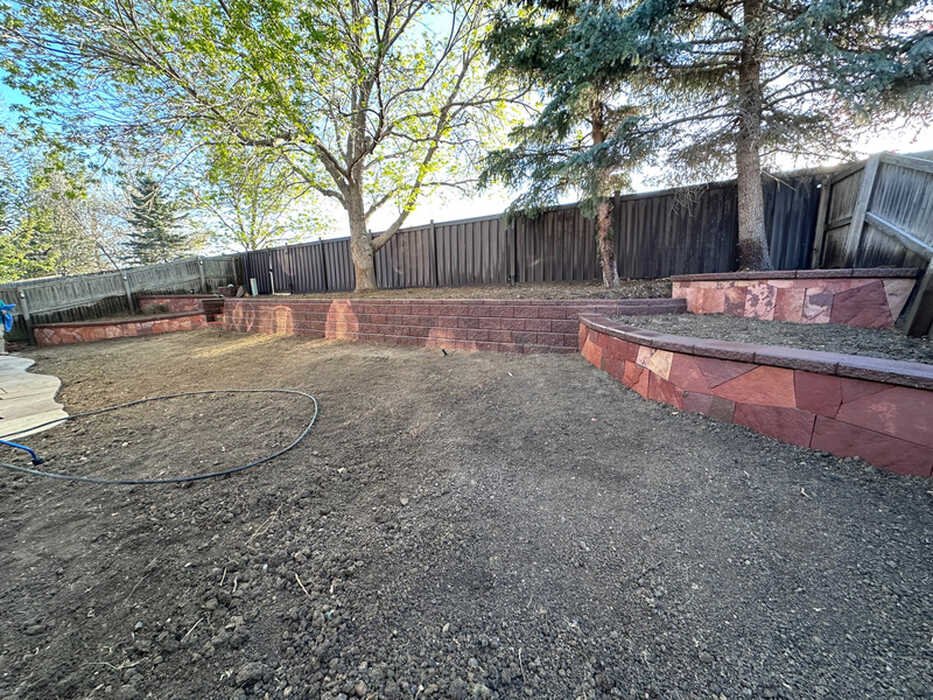
We work as a retaining wall contractor across Highlands Ranch, Littleton, Centennial, Lone Tree and the south Denver metro, using natural stone and Allan Block. Our walls are built with a compacted base, proper drainage behind the blocks, and geogrid reinforcement where the height calls for it.
This page explains how we build and why, so you can judge any quote you are holding — ours or anyone else’s.
Why Retaining Walls Fail in ColoradO
Three things push walls over here, and none of them are the wall itself.
Expansive clay. Much of the Front Range sits on soil that swells when wet and shrinks when it dries. That movement works against anything built on it, season after season. A wall footed too shallow moves with the ground.
Freeze-thaw. Denver runs through dozens of freeze-thaw cycles a year, far more than most of the country. Water that gets behind a wall and freezes expands, and that expansion has to go somewhere. Usually forward.
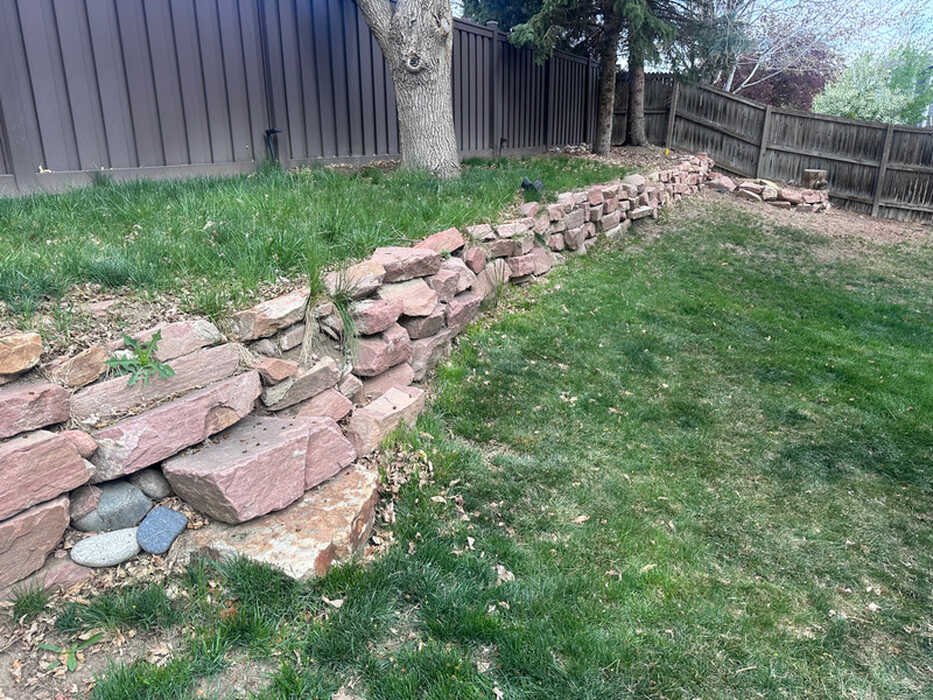
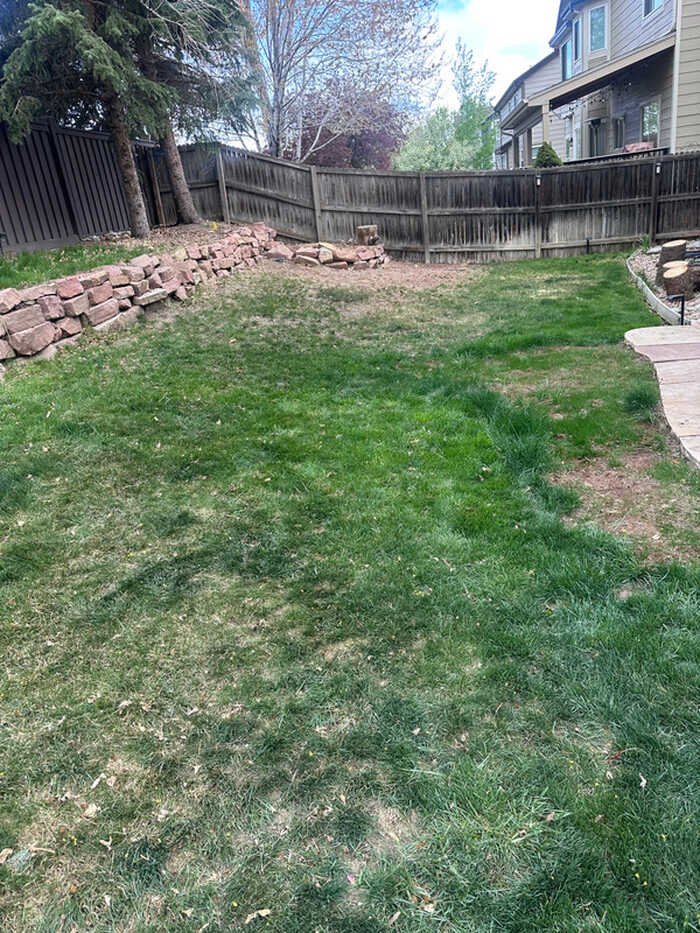
Hydrostatic pressure. This is the one that does the real damage. Soil holding water behind a wall becomes enormously heavy. A wall built without drainage is holding back not just earth but everything that falls on it. Most leaning walls you see around Highlands Ranch failed here, not because the blocks were wrong.
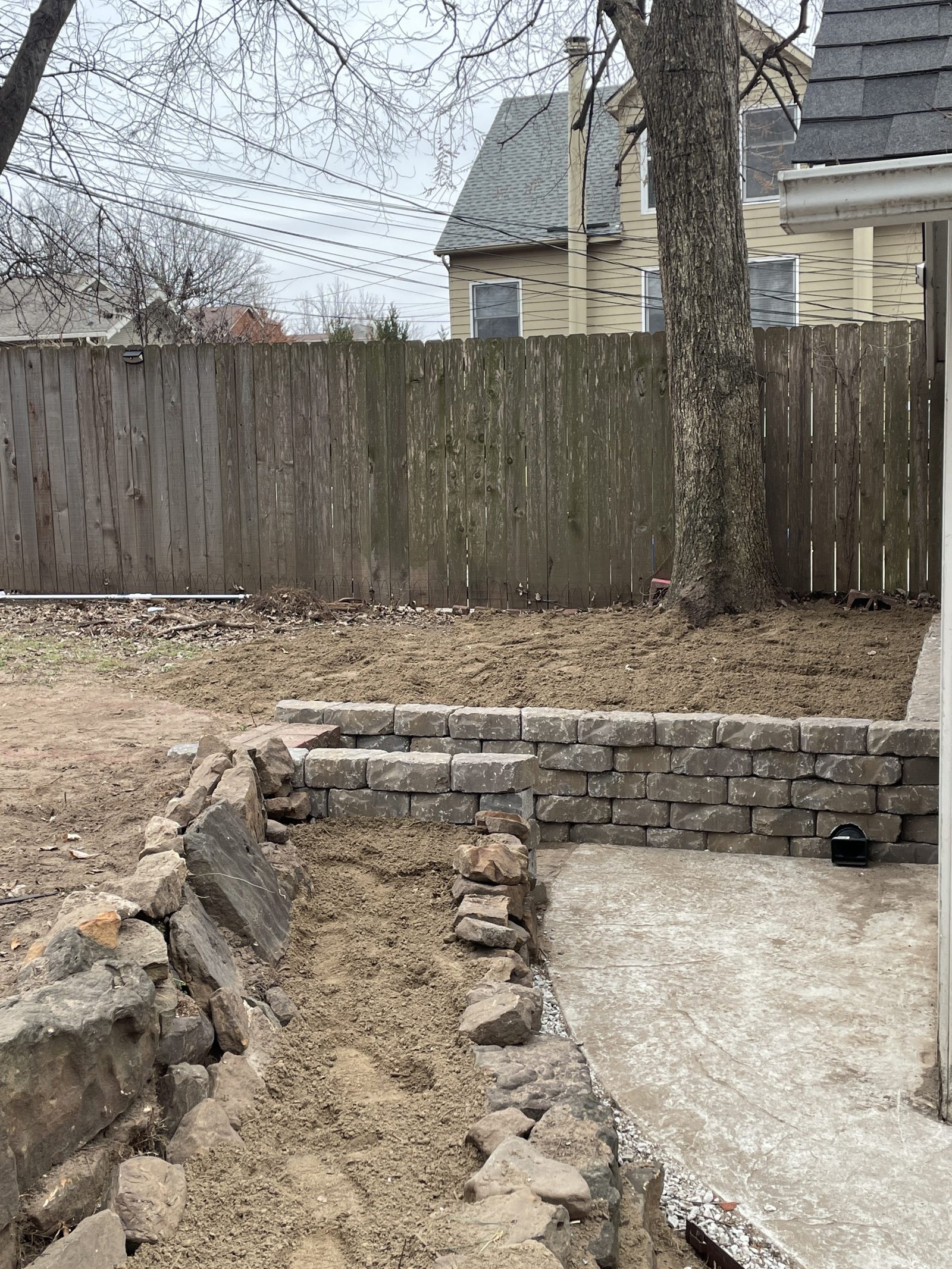
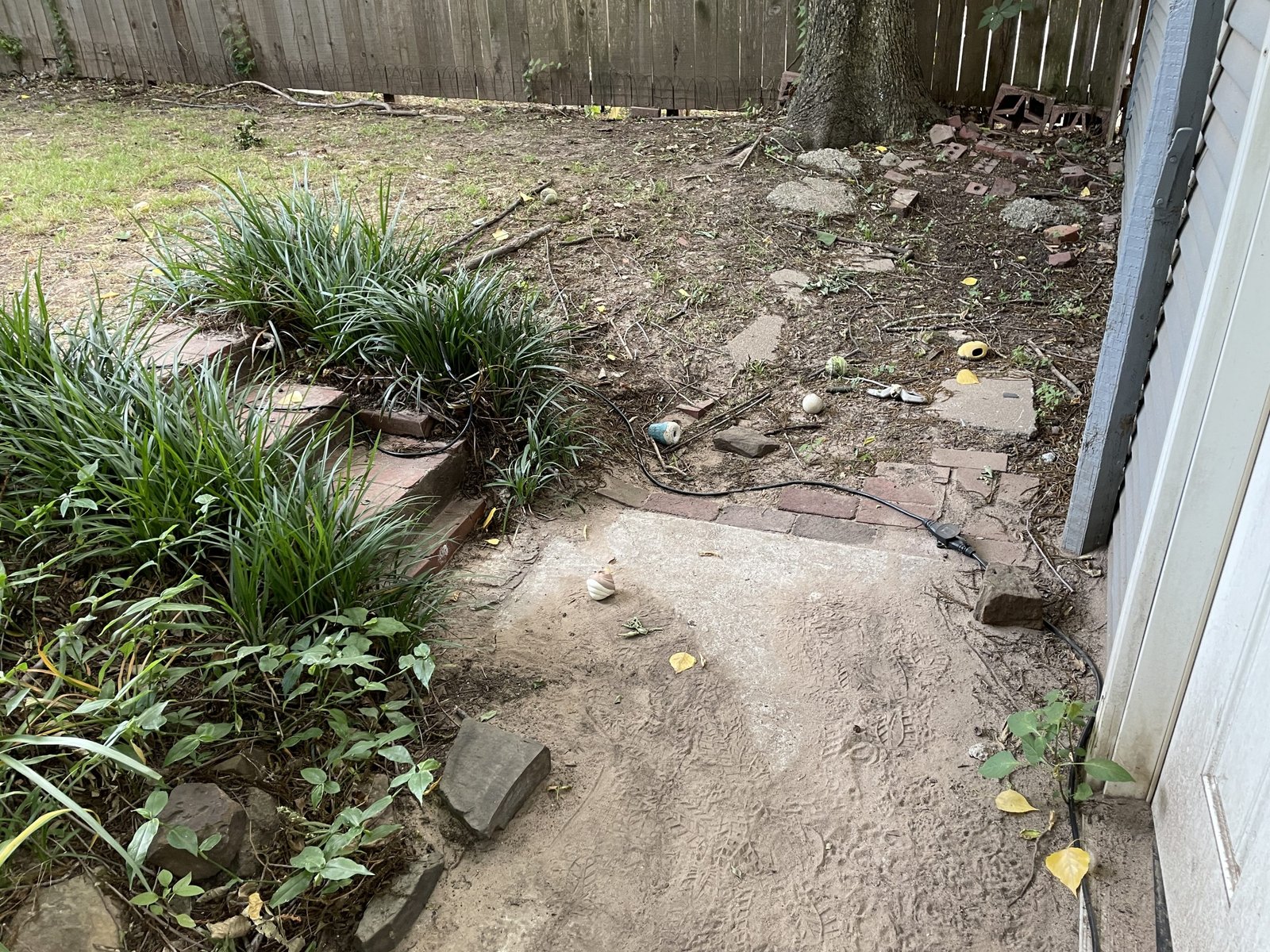
Built properly, a retaining wall does the opposite — it holds the grade, improves drainage, and turns a sloped yard into usable space for a patio, a garden or somewhere to sit.
How a Retaining Wall Contractor Should Build in This Soil
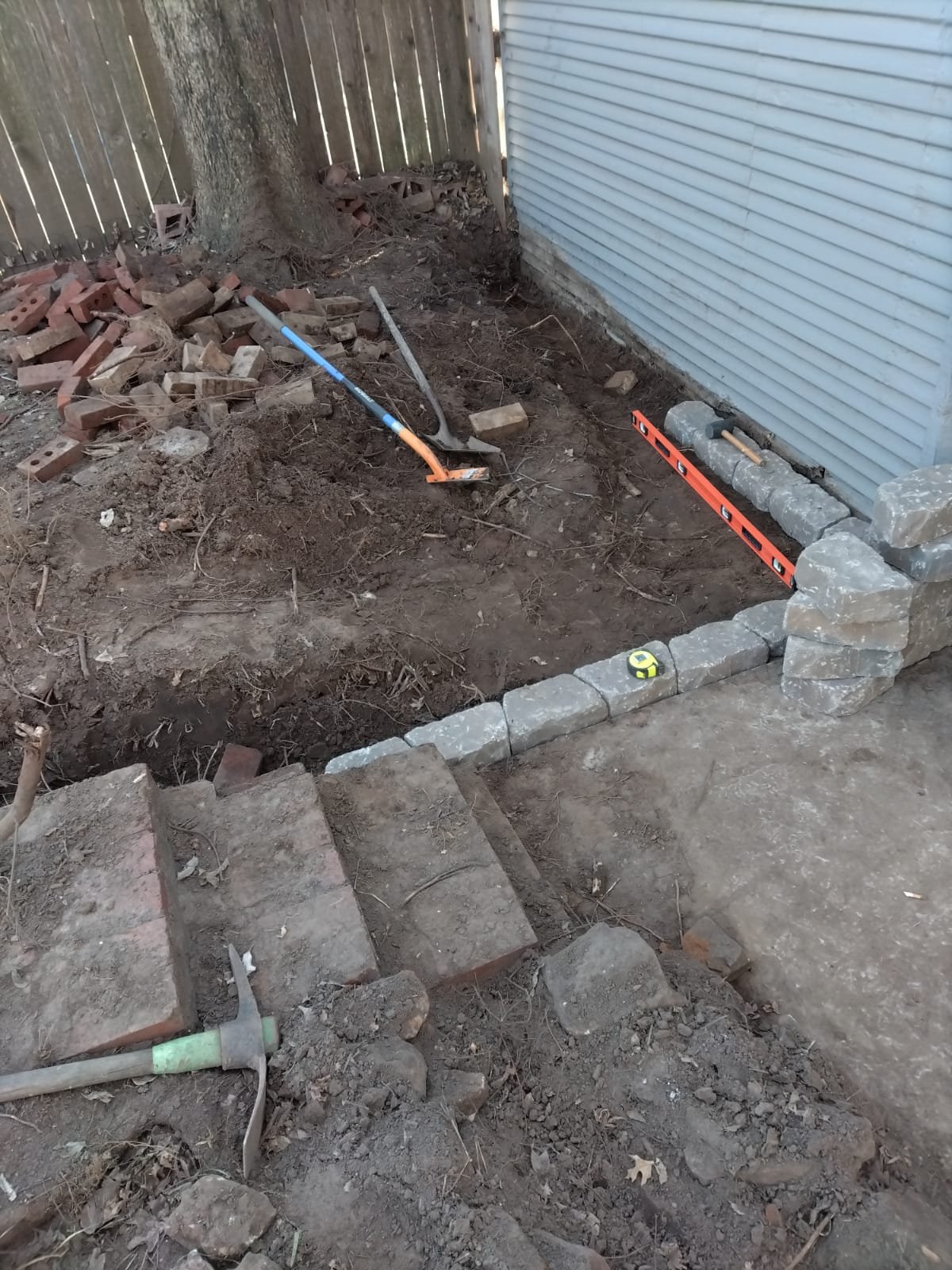
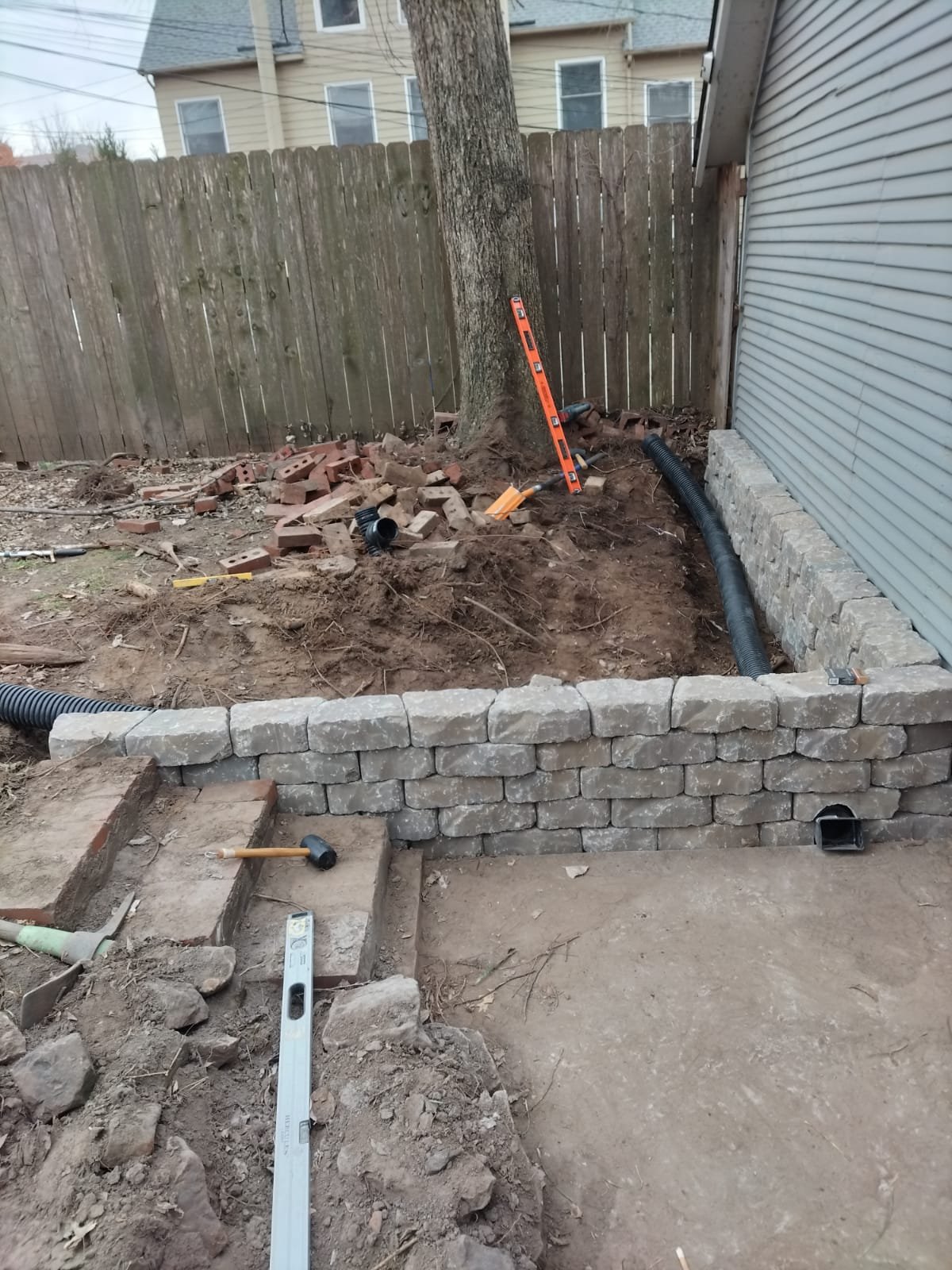
The base does most of the work. We excavate below the first course and compact a gravel base properly, in layers, with a plate compactor rather than a few passes for appearance. On taller walls the first course is set in concrete with rebar. That first row is the one every other row depends on, and it is the row nobody ever sees.
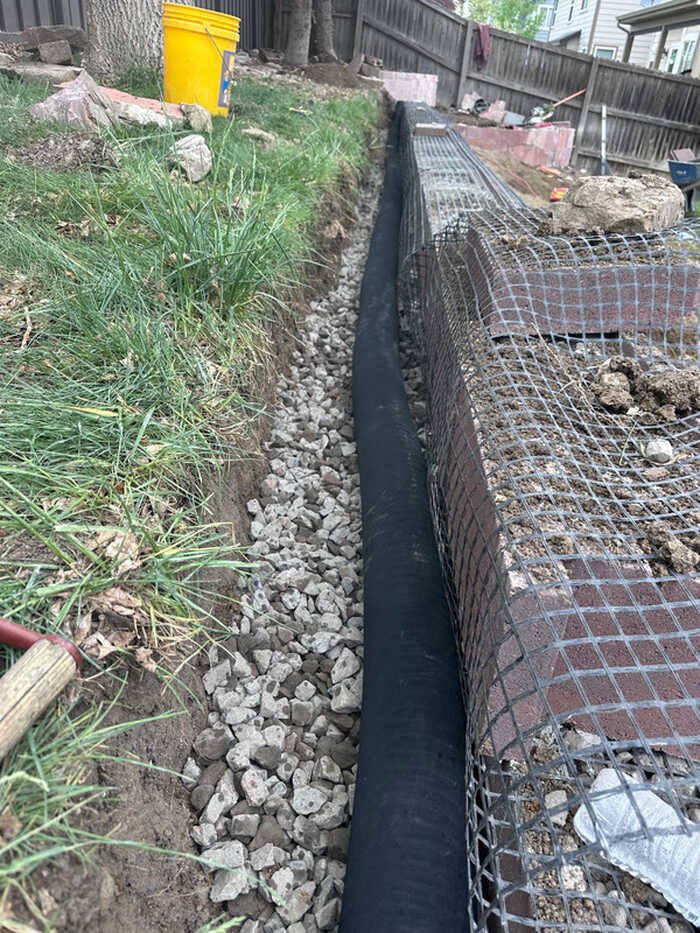
Drainage behind the blocks. Angular drainage rock goes in behind the wall, not the soil that came out of the hole. Water reaching the back of the wall runs down through that rock and out, instead of sitting there building pressure. On longer or taller runs we add perforated pipe to daylight. This is the step that gets skipped on cheap quotes — it is invisible, it costs money, and the wall looks identical without it for about three years.
Geogrid where the height needs it. Geogrid is a reinforcing mesh laid back into the soil between courses. It ties the wall to the ground behind it so the whole mass resists movement together, rather than the blocks alone taking the load. Any wall over about three feet generally needs it, and taller walls need more layers.
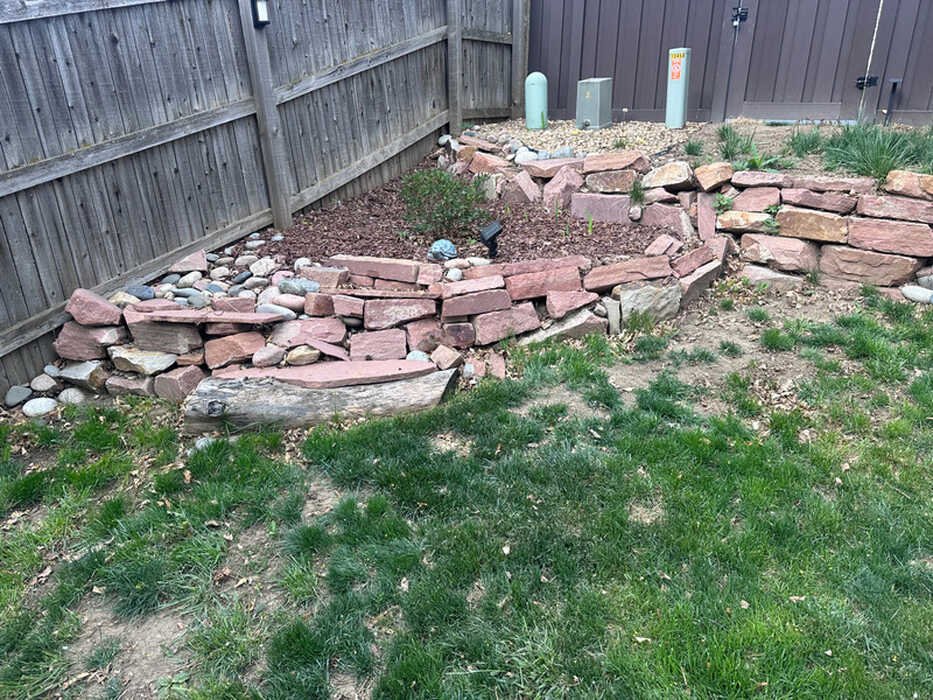
Block and stone. We build in Allan Block and natural stone. Segmental block is engineered for this work, comes in colors that suit Front Range homes, and holds its line. Natural stone costs more and looks like it belongs, particularly on properties backing onto open space.
Why People Choose Us as Their Retaining Wall Contractor
A lot of our retaining wall work comes from jobs that cross trades. A wall by a pool, a wall that needs drainage tied into existing lines, a wall alongside new concrete. We build decks, patios, concrete and pools as well, so nobody has to coordinate three contractors who each want a different one to go first.
We will come out, look at the grade, the drainage and what the wall actually has to hold, and you will get a written quote that spells out the base, the drainage, the reinforcement and the block. If a wall is not the right answer for your yard, we will say so.
Call (303) 718-4619 for a free on-site quote.
Walls Over Four Feet Need an Engineer
Walls of four feet and under do not require engineering drawings or a permit. Above four feet, measured from the bottom of the footing, you need a stamped engineering design and a permit. Requirements differ between jurisdictions, so we check what applies to your property before quoting. If a wall needs engineering, that is in the quote rather than discovered halfway through.
And if you are in an HOA — most of Highlands Ranch is — there may be an architectural approval process before anything starts.
Worth asking any retaining wall contractor you speak to whether your wall needs a permit. The answer tells you a lot.
Rather We Call You?
Leave your name and number and we’ll call you back — usually the same day. Or call us now on (303) 718-4619.