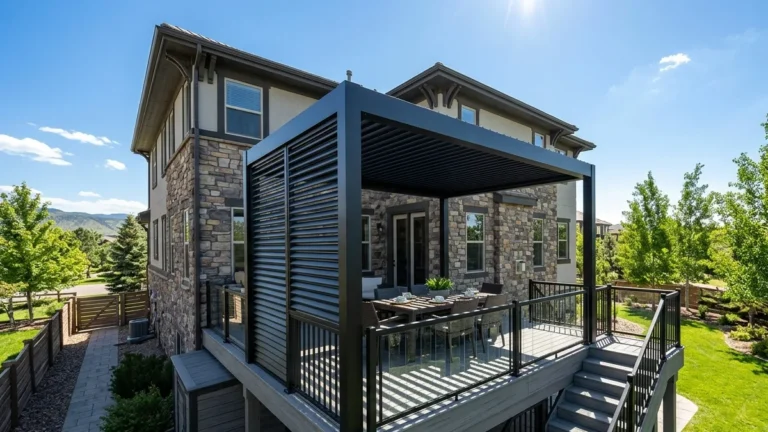
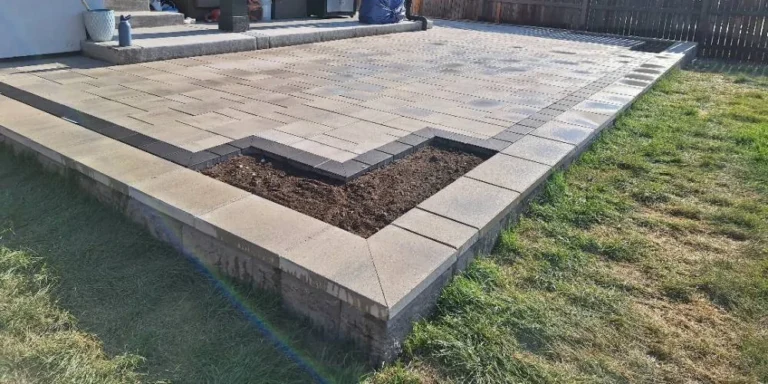
Deck vs patio is one of the first questions homeowners ask us when they start planning an outdoor living space. Should I build a deck or a patio?
At Elevate Landscape & Spas, we’ve completed hundreds of deck and patio projects, so we’ve seen what drives the cost, the upkeep and the long-term value of both options.
The decision isn’t just about personal preference. It’s a real investment that shapes how you use your yard and how your home shows to buyers for years to come.
Understanding the deck vs patio question means looking at what goes into building a deck or a patio, ongoing upkeep, resale appeal, and how each option suits your specific lot.
Our experience has shown that the “best” choice varies a lot depending on lot slope, architectural style, local climate and how you plan to use the space.
Deck vs Patio: What Each One Is Built On
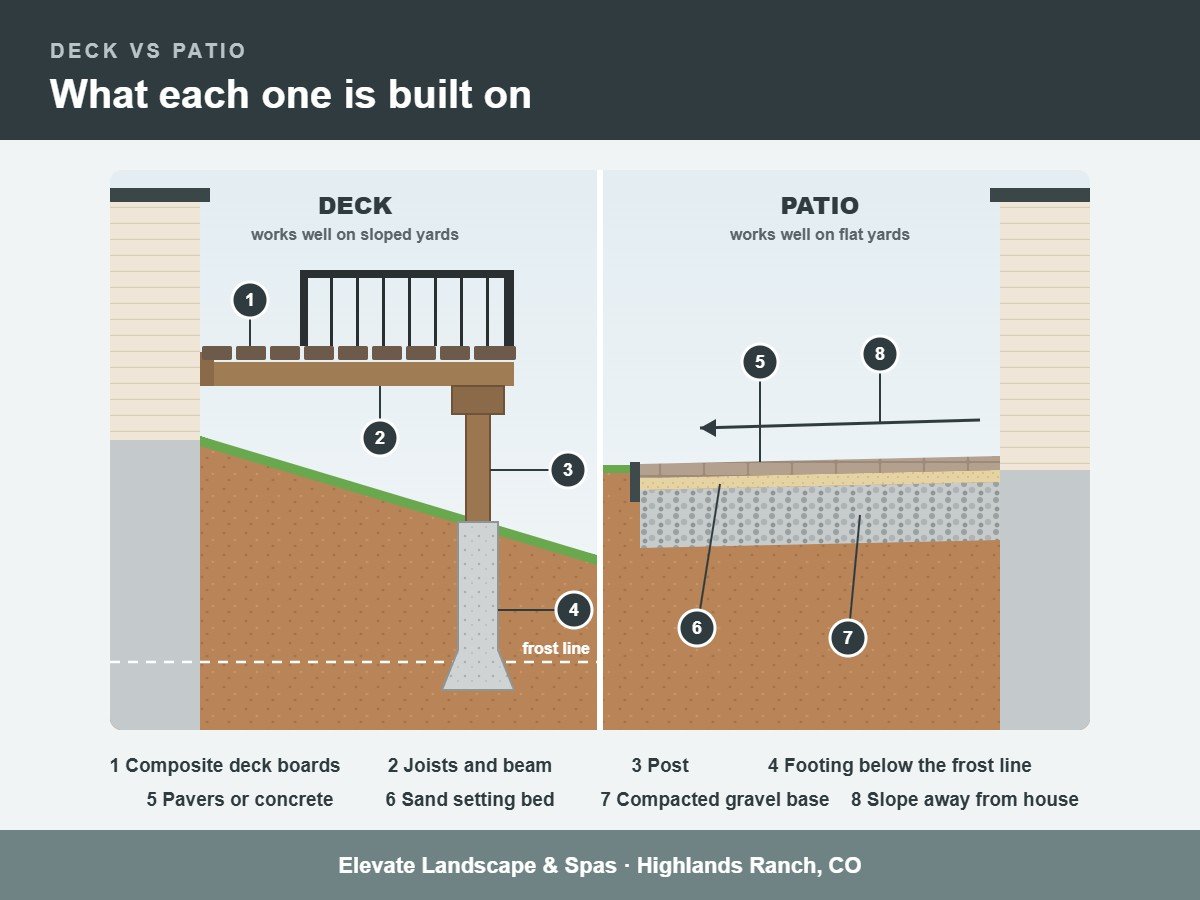
The biggest difference between a deck and a patio is what holds it up. A deck is a raised frame of joists and beams carried by posts, and each post sits on a concrete footing that has to go below the Colorado frost line so it doesn’t heave in winter. A patio sits right on the ground, on a sand setting bed over a thick, compacted gravel base that is sloped so water runs away from the house.
That is why a sloped yard often favors a deck. The posts simply get taller, and you get a level space without moving a lot of soil. On a flat yard, a patio needs far less structure and usually fits more naturally.
What Drives the Cost of a Deck or a Patio
In the deck vs patio comparison, the upfront cost difference can be substantial, but the gap isn’t always as wide as homeowners expect. Rather than quoting general numbers that may have nothing to do with your yard, here is what actually moves the cost of each.
For a deck, the biggest drivers are size, height above the ground and the number of stairs. A deck off a walkout level needs taller posts, bracing, guardrail and deeper footings than one a step off the patio door. The board line matters too, since Trex, TimberTech and Deckorators each offer entry, mid and premium composite lines. So does the railing, whether it’s composite, aluminum, cable or glass. Footings have to go below Colorado frost depth, tearing out an old deck adds work before the new one starts, and most decks need a permit and inspections.
For a patio, the drivers are the material and what goes underneath it. Plain concrete, stamped or decorative concrete, pavers and natural stone each sit at a different level, and intricate patterns or borders add labor. Proper excavation, a compacted base and good drainage are what keep a patio from heaving and cracking through our freeze-thaw winters, and a sloped yard may need grading or a retaining wall before anything goes down.
For both, site preparation, access for equipment, HOA approval and design complexity all play a part. The only accurate number comes from seeing your yard in person.
Material Longevity and Upkeep
In any deck vs patio decision, the total cost of ownership goes well beyond installation, so it helps to know how much care each material asks for over the years.
Composite decking is the low-maintenance way to build a deck. There is no sanding, staining or sealing, just periodic cleaning. That is a big reason we build our decks with composite, since the old pattern of yearly cleaning, staining every few years and replacing boards as they split is exactly what most homeowners want to get away from.
Concrete patios need to be sealed every few years and may need the odd crack repaired. Natural stone and quality pavers usually need little beyond cleaning and topping up the joint sand, and a single damaged paver can be lifted and replaced.
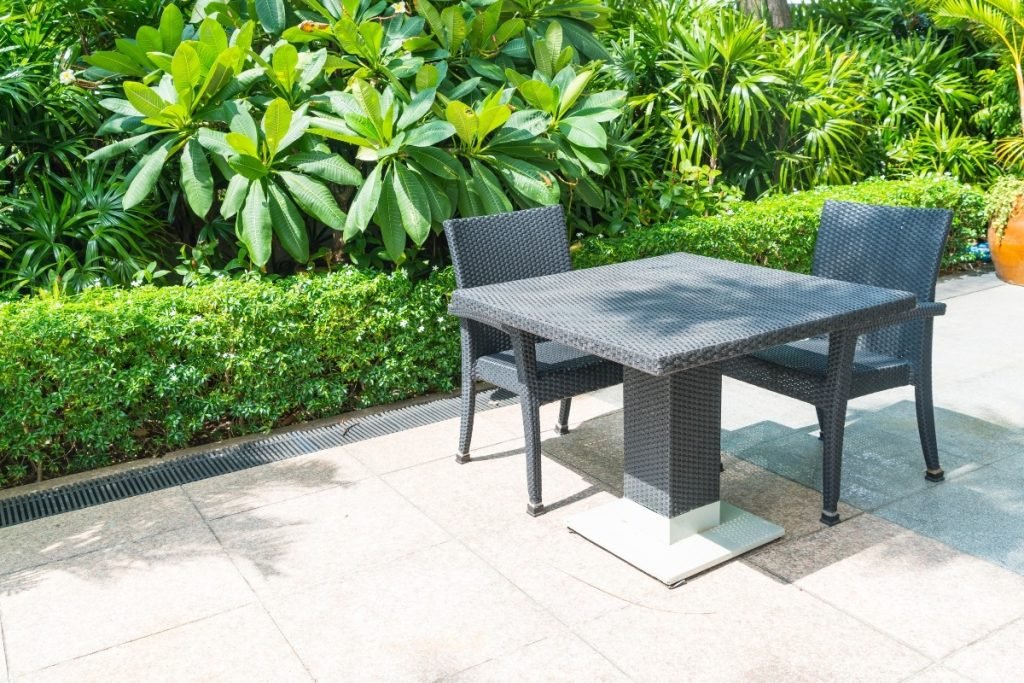
Over the long run, a well-built concrete or paver patio is usually the lowest-upkeep choice, with a composite deck close behind. Either one, built properly, gives you many years of easy use.
Deck vs Patio Home Value: Which Adds More?
When it comes to deck vs patio home value, both can add real value to your home, and which one adds more depends on your lot and your neighborhood more than on the material alone.
A deck tends to shine on suburban lots where buyers expect one, on sloped properties where it creates usable space that wouldn’t otherwise exist, and on homes where the main floor sits well above the yard. Buyers who want a defined outdoor room for entertaining often look for one.
A patio tends to shine on flat lots, on homes with ground-level access to the yard, and where it ties into landscaping, a fire pit or an outdoor kitchen. Buyers who want a low-upkeep space often lean this way.
In our experience, the projects that add the most value are the ones that fit the site. An elevated deck on a sloped lot or a paver patio that flows out from a ground-level door both feel like a natural part of the home.
5 Factors That Decide the Deck vs Patio Question
Through hundreds of property visits, we’ve found five factors that decide whether a deck or a patio will serve you better:
1. Lot Slope and Site Conditions
Sloped lots often favor a deck because it creates a level outdoor space without heavy grading. Flat lots offer more flexibility, and both options can work well.
2. Architectural Style
Traditional and colonial homes often show off a deck beautifully, while contemporary and southwestern styles tend to suit a patio. The key is choosing an option that feels like part of your home’s existing design.
3. Climate
With big temperature swings like ours, composite decking and well-built stone or paver patios handle freeze-thaw cycles best. Strong sun calls for materials that resist fading and don’t get too hot underfoot.
4. Your Neighborhood
Look at what nearby homes have. Some neighborhoods are full of raised decks, while others favor patios tied into landscaping. Matching what buyers in your area expect helps at resale.
5. How You’ll Use the Space
Families who want a defined entertaining space often prefer a deck with built-in seating and railings. Homeowners who want a seamless indoor-outdoor flow often lean toward a patio that extends the living space at ground level.

When a Deck Is the Better Choice
A deck usually comes out ahead on sloped or uneven lots, where it creates level space without major grading, and on homes with raised main floors, where it gives you easy outdoor access right off the kitchen or living room.
It is also a strong choice on smaller yards, since a raised deck leaves the ground below free, and on properties with a view worth lifting you up to see. Our elevated deck builds have been especially useful on challenging lots where a patio would need a lot of excavation and grading.
When a Patio Is the Better Choice
A patio usually comes out ahead on large, flat lots, where it can spread across a big area, and on homes with ground-level access to the yard.
It is also a great fit when low upkeep is the top priority, and when the patio is part of a bigger landscape plan. Natural stone and decorative pavers look especially good when they are worked into different landscape design ideas.
Deck vs Patio at a Glance
| Decision Factor | Deck | Patio |
| Sloped Lots | Strong fit | Needs grading |
| Flat Lots | Good fit | Strong fit |
| Upkeep | Low with composite | Low |
| Freeze-Thaw | Footings below frost line | Needs a proper compacted base |
| Build Time | Moderate | Usually faster |
| Design Flexibility | High | Very high |
How Material Choice Affects Long-Term Value
The materials you choose shape both the upfront cost and how well the space holds up. Natural stone patios tend to look better with age than plain concrete, composite decking keeps its color and finish without the yearly upkeep, and built-in features like seating or a fire pit make either option more useful.
If budget is tight, there are still good options. Decorative concrete with a quality finish, an entry-level composite line on a well-built frame, or a quality paver system installed properly all add lasting value. The key is choosing materials that hold up and look good while staying within your budget.
Building for Colorado Weather
Here in the Denver area, whichever way your deck vs patio choice goes, freeze-thaw resistance matters for every material. Proper drainage and a solid foundation, whether that’s footings below the frost line or a deep compacted base, prevent most of the costly repairs we see on older projects.
Strong high-altitude sun also matters, so we look for fade resistance and surface heat when choosing boards and pavers. Seasonal use plays a part too, since many homeowners add a fire pit or a covered area to stretch the season into spring and fall.
Why Professional Installation Matters
The quality of installation affects both how the space feels on day one and how it holds up for years. We’ve seen poorly built decks and patios become a problem when a home goes on the market, while well-built ones are a selling point.
Good installation comes down to proper foundation and drainage work, code compliance and permits, quality materials handled with care, a design that ties into your existing landscape, and attention to the finish details that make it last.
Our design and construction teams handle both deck and patio installation, so we can recommend the option that will work best for your property and goals.
Making Your Deck vs Patio Decision
The choice comes down to what fits your yard and how you live. Ask yourself whether your lot’s slope favors one option, what nearby homes have, how you’ll really use the space, what you’re comfortable spending on both the build and the upkeep, and how long you plan to stay in your home.
The projects that work best are the ones where the deck or patio choice matches the site, the neighborhood and the homeowner’s lifestyle.
Ready to Plan Your Outdoor Space?
Settling the deck vs patio question is a real investment in your home and your family’s time outdoors.
At Elevate Landscape & Spas, we provide premium landscaping services in Highlands Ranch, and we’ll give you straight guidance on which option is right for your property.
The only accurate number for your project comes from an onsite visit, where we can see the slope, the access and the space you want to use. Call Elevate Landscape & Spas at (303) 718-4619 to book an onsite visit and get a quote, or contact our specialists online.
Rather We Call You?
Leave your name and number and we’ll call you back — usually the same day. Or call us now on (303) 718-4619.
Rather write it down?
✎ Send us your project details