Wondering if you’re seeing the signs you need a French drain? Puddles that never seem to leave, a lawn that squishes underfoot or a damp basement after every storm all point to water that has nowhere to go. Here in Colorado, sudden spring downpours and heavy snowmelt land on clay soil that holds water instead of letting it soak away, so these problems rarely fix themselves.
This guide walks through the five most common signs, a few less obvious clues, a simple test you can do at home, and when a French drain is the right fix versus something simpler. At Elevate Landscape and Spas we see these problems every week across Highlands Ranch and the south Denver metro.
5 Signs You Need a French Drain
If you spot one of these, keep an eye on it. If you spot two or three, it’s time to look at drainage before the damage spreads.
Less Obvious Clues Worth Watching
Not every drainage problem shows up as a puddle. These clues are easy to miss but often lead back to the same thing:
Do I Need a French Drain or Something Else?
A French drain isn’t the answer to every wet yard. Sometimes a simpler fix does the job, and a good contractor should tell you that. Here’s how the options compare:
The signs you need a French drain are the ones where water is below the surface, not just running across it. That’s the key difference, and it’s what we look for on a site visit.
How a French Drain Works
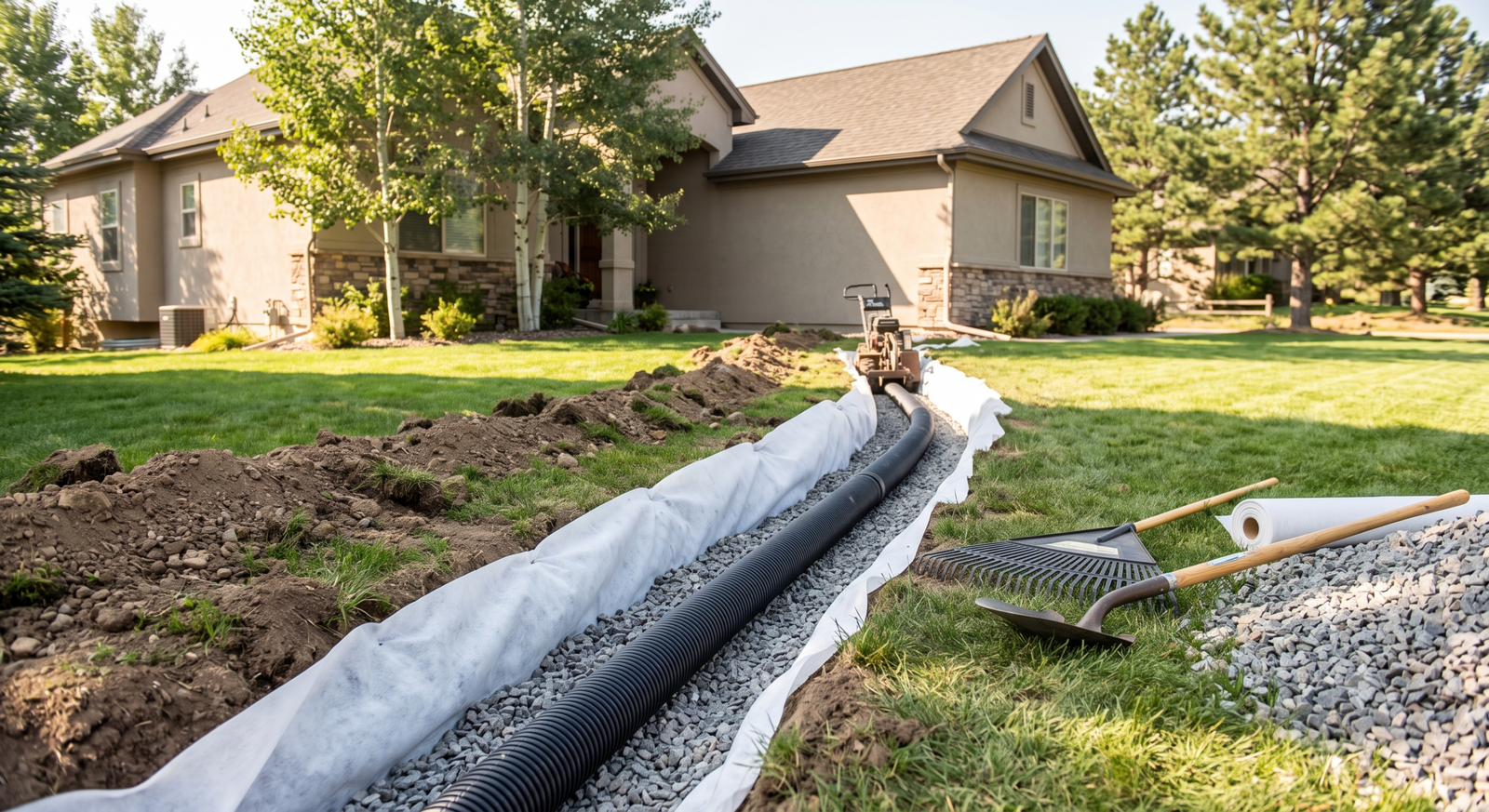
Despite the fancy name, the idea is simple. A French drain is a gently sloped trench lined with fabric, filled with washed drain rock and laid with a perforated pipe. Water in the soil naturally moves toward the path of least resistance, which leads it into the rock, through the pipe and out to a safe spot away from your home.
Once the trench is backfilled and the sod or rock goes back on top, it disappears. You don’t see it, you just stop seeing the water, and the signs you need a French drain go away with it.
Why Colorado Clay Makes It Worse
Much of the south metro sits on expansive clay. Clay soaks up water slowly and then holds onto it, so a heavy storm or a fast spring melt can leave it saturated for days. When saturated clay freezes and thaws, it heaves, which is why drainage problems here often show up as moving walls, sinking pavers and cracked slabs, not just wet grass. That’s why the signs you need a French drain tend to get worse each season instead of better.
A Simple Test You Can Do at Home
Before you call anyone, you can check for the signs you need a French drain yourself in a weekend:
What Affects the Cost of a French Drain
Once you have spotted the signs you need a French drain, the next question is cost. Every yard is different, so the price comes down to a few things: how long the trench runs, how deep it has to go, where the water can be released, what’s in the way (patios, trees, sprinkler lines) and how easy it is to get equipment into the yard. A drain that only needs to move water across a lawn is a very different job from one that has to protect a foundation and tie into downspouts.
The best way to get a real number is an on-site look. We walk the property, find where the water is coming from and where it can go, then give you a written quote. You can see exactly how we build them on our French drain installation in Highlands Ranch page.
While proper drainage is an upfront investment, it is far cheaper than repairing foundation damage or replacing washed-out hardscaping down the road.
How We Build a French Drain
Proper installation is everything. If a drain isn’t sloped correctly or lacks the right fabric, it will clog with mud and fail. When we build a French drain, we follow the same process every time:
Drainage and Your Existing Landscaping
Water management is a crucial part of any major outdoor project. If you are planning a new deck, paver patio or retaining wall, making sure the ground underneath drains properly is step one. We always look at the local soil and grade before any heavy landscape construction.
French Drain FAQs
What are the signs you need a French drain?
The most common signs you need a French drain are standing water that lasts more than a day after rain, a spongy lawn that never dries out, water against the foundation or in window wells, washed-out beds, and ice patches where meltwater keeps running across paths.
Can I just regrade my yard instead?
Sometimes. If water only runs toward the house on the surface, regrading or extending downspouts can fix it. If water sits in the soil itself, in low spots, behind walls or along a patio, a French drain is usually the better fix.
How deep is a French drain?
It depends on the problem. A drain that dries out a soggy lawn can be fairly shallow, while one that protects a foundation or sits behind a retaining wall needs to go deeper. We size it on site.
Where does the water go?
To a safe outlet on your own property, like a lower part of the yard, a pop-up emitter or a dry well. It should never be sent onto a neighbor’s lot or across a walkway where it will freeze.
How much does a French drain cost?
It depends on the length and depth of the run, what has to be removed and put back, and where the water can go. We give an exact written quote after an on-site visit. Call (303) 718-4619 to set one up.
Seeing the Signs? Let’s Take a Look
Water damage doesn’t fix itself, and soggy spots only lead to bigger repairs as the seasons change. If you’re seeing the signs you need a French drain, or you’re just not sure what’s causing the water, we’ll come out, find the source and tell you honestly what will fix it.
Call (303) 718-4619 or contact us to set up an on-site drainage visit in Highlands Ranch or the south metro.
Rather We Call You?
Leave your name and number and we’ll call you back — usually the same day. Or call us now on (303) 718-4619.
Rather write it down?
✎ Send us your project details