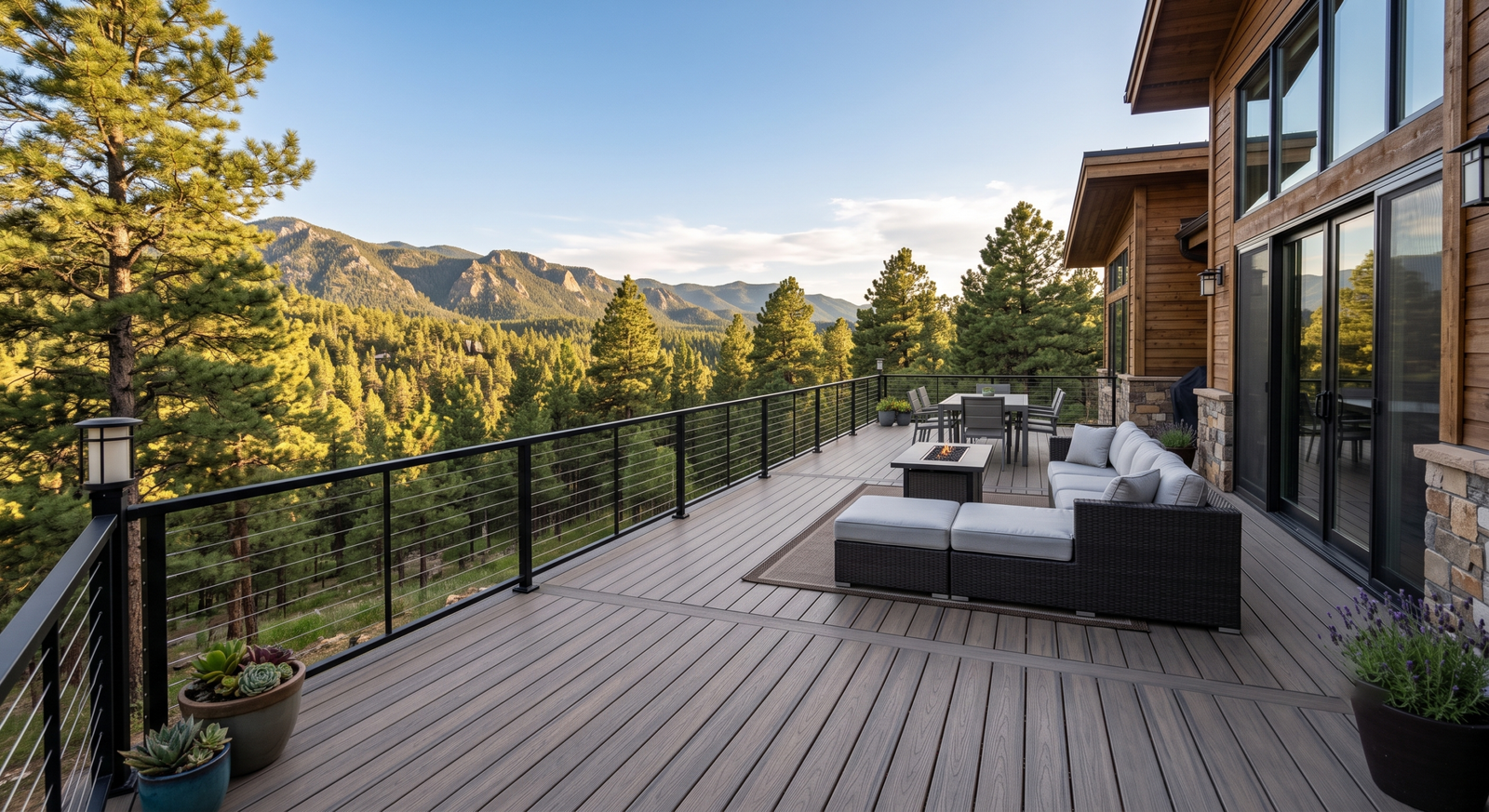
Composite decking has become the default choice for Colorado homes, and for good reason. Our climate is harder on a deck than most people expect.
We get more intense UV than almost anywhere in the country because of the altitude, we swing thirty degrees in a day, and we put snow on a surface then melt and refreeze it repeatedly through the winter. A deck that would last twenty years in a milder climate can look tired here in five.
We build a lot of composite decking around Highlands Ranch and Littleton, and we are certified with the three main manufacturers — TrexPRO, TimberTech Member Pro and Deckorators Certified Pro. This is what we have learned about what actually holds up here.
Composite Decking Versus Wood in This Climate
Wood is not a bad material. It is just a high-maintenance one in Colorado. Our UV levels break down surface finishes faster, and the wet-dry cycling drives cupping, splitting and fastener movement. Keeping a wood deck looking good here realistically means sanding and re-staining every year or two, and most people stop doing it by year three.
| Wood | Composite decking | |
|---|---|---|
| Annual maintenance | Clean, sand, stain or seal | Wash it down |
| UV fading | Noticeable, needs refinishing | Minimal on modern capped boards |
| Splitting and splintering | Common with age | Does not split |
| Moisture and rot | Vulnerable at joints and ends | Not affected |
| Upfront cost | Lower | Higher |
| Cost over 15 years | Higher once refinishing is counted | Lower |
The honest summary is that composite decking costs more on day one and less across the life of the deck. If you are planning to move within two or three years, wood may still make sense. If this is the house you are staying in, composite almost always wins.
Not All Composite Decking Is the Same
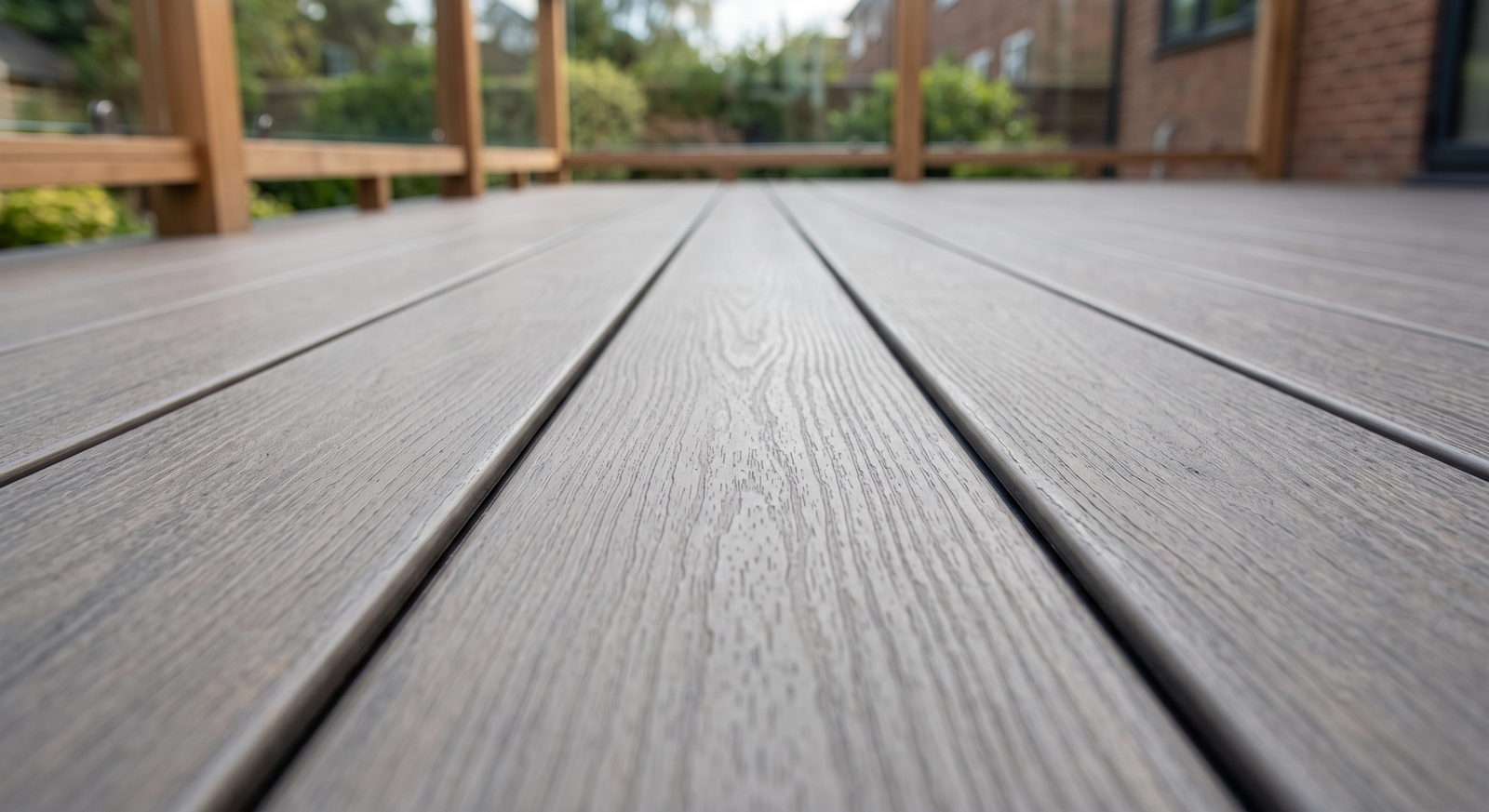
The single biggest quality difference is whether the board is capped. Uncapped composite — mostly older or budget product — has the wood-plastic core exposed on the surface, which means it can stain, fade and take on moisture. Capped composite decking has a protective polymer shell bonded around it.
In our climate, we would not install uncapped board. The UV exposure alone makes it a false economy.
Heat
Worth knowing before you choose a color: dark composite decking gets hot in direct Colorado sun. If the deck is unshaded and gets used barefoot in July, a lighter tone is a more comfortable choice. This is the sort of thing people discover after installation, and it is easily avoided.
Where Composite Decking Actually Fails
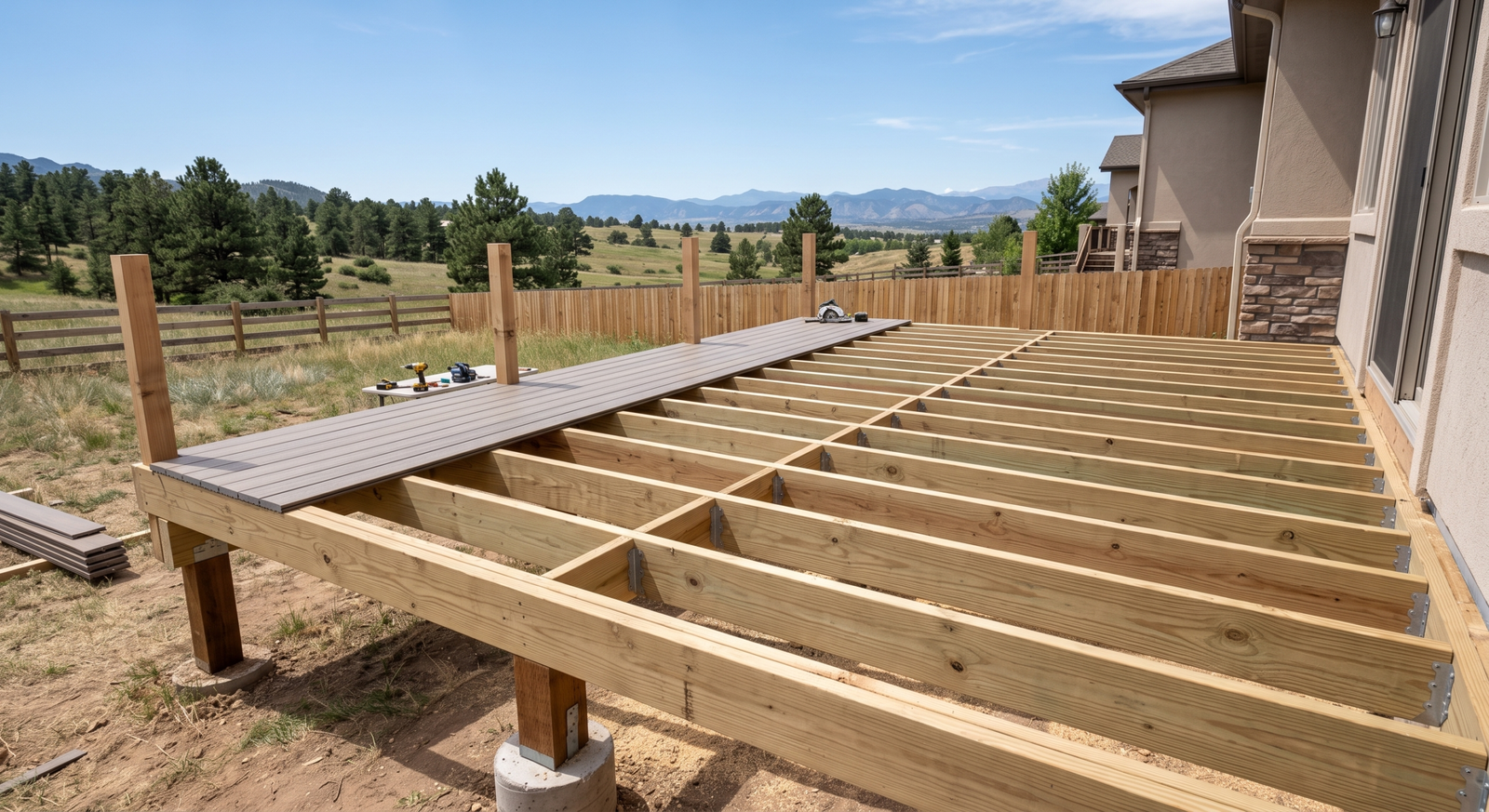
In our experience, the boards are rarely the problem. Failures come from what is underneath and how it was put together.
- The substructure. Composite decking on an undersized or poorly treated frame will outlast its own framing. The joists and beams need to be specified properly and protected.
- Drainage and ledger detailing. Water getting behind the ledger board where the deck meets the house is the most expensive failure there is, because it becomes a house problem rather than a deck problem.
- Expansion gaps. Composite moves with temperature. Boards fitted tight in a cool morning will buckle in August if the gapping was not allowed for.
- Fastening. Hidden fastener systems are not just cosmetic — they let boards move as designed and keep water off screw penetrations.
All four of those are installation decisions, not material ones. It is why manufacturer certification matters — it means the installer has been trained on how that specific product is meant to be fitted, and it is usually what warranty cover depends on. We hold current certifications for Trex and TimberTech board systems.
Late Summer Is a Good Time to Build
Two practical reasons. You get the deck finished in time to use it through the fall, which is arguably the best season to sit outside in Colorado. And you are ahead of the spring rush, when every deck builder in the metro is booked out and lead times stretch.
Looking at Composite Decking for Your Home?
We will come out, look at the space, talk through how you actually want to use it, and give you an honest view on materials — including telling you if we think you would be better off with something other than what you came in asking for. Have a look at our deck building work to see what we have done for other Colorado homes.
Call us on (303) 718-4619 for a free design consultation and quote.
Pricing depends on the size and height of the deck, substructure requirements, railing selection and the board line you choose. We will give you a firm figure once we have seen the site.
Rather We Called You?
Leave your name and number and we’ll call you back — usually the same day. Or call us now on (303) 718-4619.