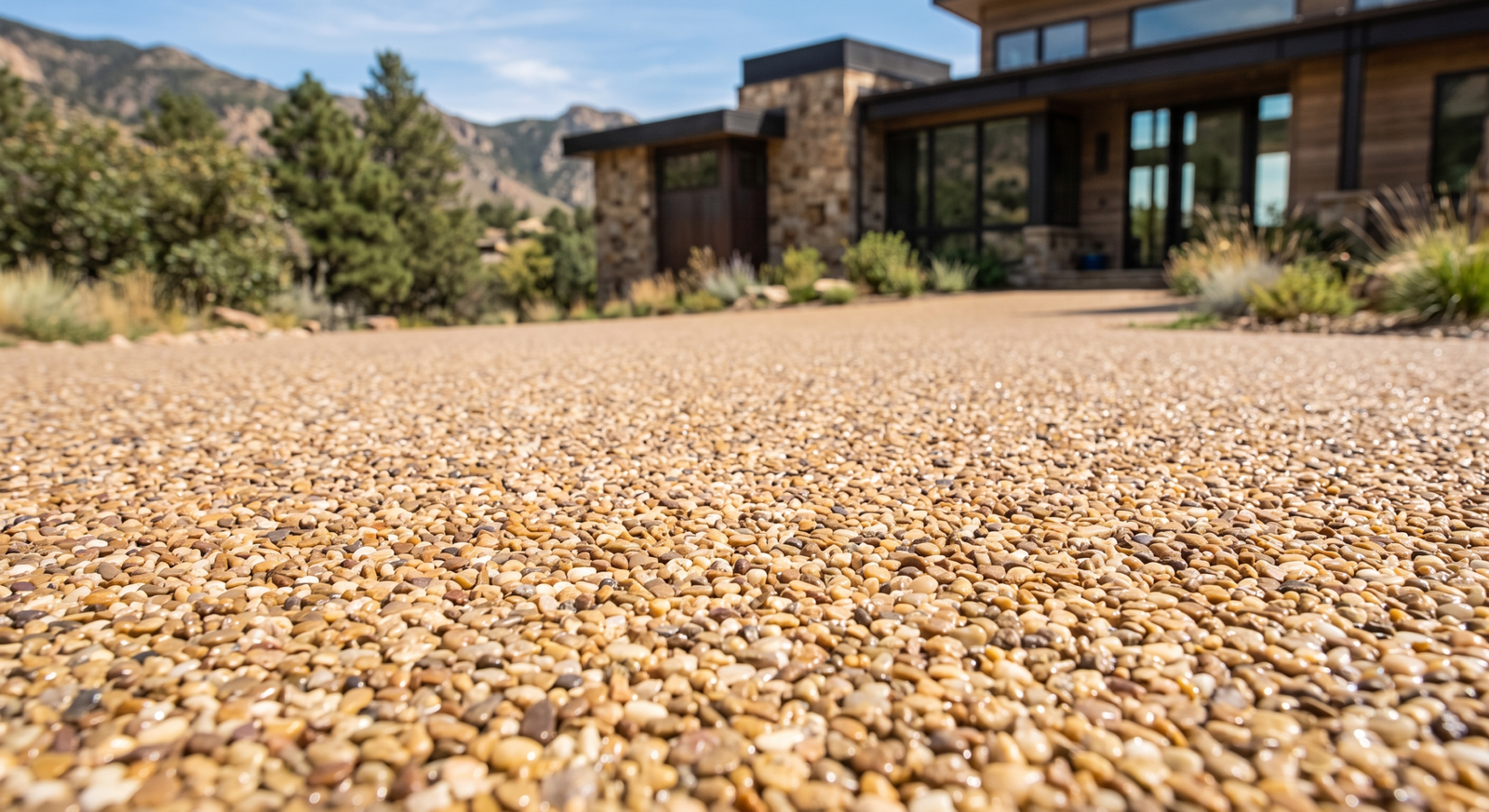
Resin-bound stone is one of the few driveway surfaces that genuinely copes with a Colorado winter. Here is why.
If you have ever swept gravel off a Colorado driveway in March, or watched meltwater sit in the same low spot every spring until it refreezes, you already understand the problem with most driveway surfaces here. Our freeze-thaw cycles are brutal on hard surfaces, and materials that cope well elsewhere often do not last long at 5,500 feet.
Resin-bound stone is a surface we have started installing across Highlands Ranch, Littleton and the surrounding areas, and it handles our conditions genuinely well. As a Vuba Approved Installer, we wanted to explain what it actually is, where it works, and where it does not.
What Resin-Bound Stone Actually Is
Resin-bound stone is natural aggregate — small, rounded stones — mixed with a clear resin and troweled out into a single continuous surface. Every stone is coated and bound to the ones around it, so the finished result is smooth underfoot, has no joints, and does not shed loose material.
It is worth separating resin-bound stone from two things it gets confused with. It is not loose gravel, which scatters and needs raking. And it is not resin-bonded stone, where stones are scattered onto a resin layer and only stick on one side — that surface looks similar at first but sheds stone over time. Resin-bound stone is fully mixed before it goes down, which is why it stays put.
Why Resin-Bound Stone Suits Colorado
Three things make it a good fit for the Front Range specifically.
It drains instead of pooling
Resin-bound stone is permeable. Water passes through the surface and into the base below rather than sitting on top. In a climate where snowmelt regularly refreezes overnight, that matters — standing water is what causes ice patches, and repeated freezing inside a surface is what causes cracking and spalling in concrete.
It flexes with temperature swings
Colorado can move thirty or forty degrees in a day. The resin binder has a small amount of give in it, which allows the surface to handle expansion and contraction far better than a rigid slab with control joints.
Nothing loose to track indoors
Because the aggregate is fully bound, there is no gravel migrating onto the lawn, into the garage, or through the house on the bottom of boots. There are also no joints for weeds to push through, which removes a recurring maintenance job.
Where We Install Resin-Bound Stone
| Application | Why it works well |
|---|---|
| Driveways | Handles vehicle weight, drains meltwater, no loose stone |
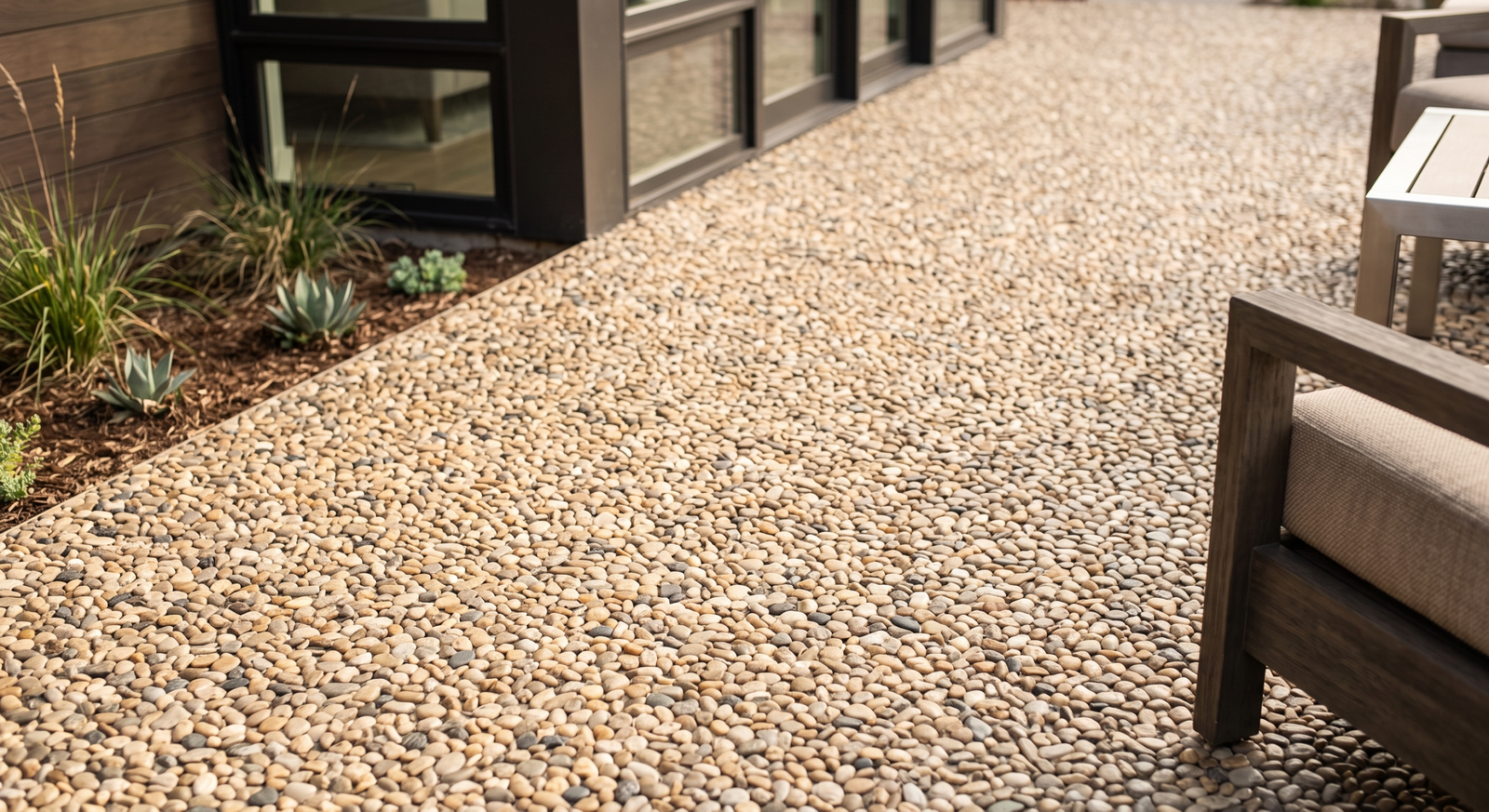
| Patios | Seamless surface, comfortable underfoot, wide color range |
| Pathways and walkways | Slip-resistant texture, no trip edges from settled pavers |
| Pool surrounds | Non-slip when wet, drains quickly, nothing loose to get in the pool |
| Resurfacing existing concrete | Often installed straight over sound concrete, avoiding a full tear-out |
That last row is worth dwelling on. If your existing concrete is structurally sound but tired-looking — surface cracks, discoloration, patch repairs — resin-bound stone can often go directly over the top. That avoids demolition, disposal and the cost of a new base, which changes the economics of the project considerably.
Where Resin-Bound Stone Is Not the Right Answer
We would rather tell you this up front than after we have quoted.
- The base has to be sound. Resin-bound stone is a surface, not a structure. If the concrete or asphalt underneath is failing, heaving or badly cracked, that has to be dealt with first.
- It needs a proper cure window. Installation depends on dry conditions and reasonable temperatures, which shortens the season here.
- Heavy commercial traffic changes the specification. Residential driveways are straightforward; anything carrying constant heavy vehicles needs a different build-up.
Maintenance
Resin-bound stone needs very little. Realistically, an occasional sweep and a rinse. There is no sealing schedule, no re-sanding of joints, and no annual top-up of loose material. Snow can be cleared with a plastic-edged shovel or a blower — we would avoid metal blades, as with any decorative surface.
Color and Finish
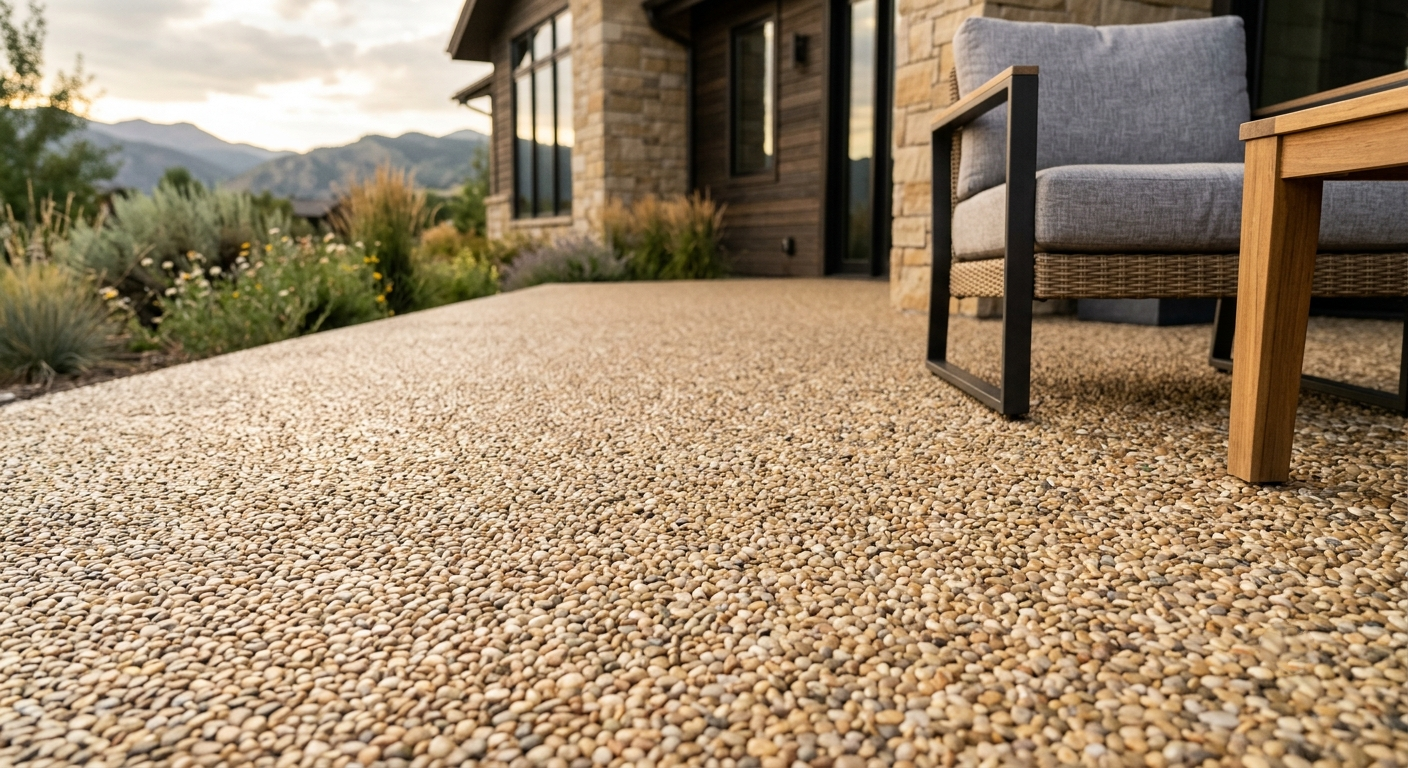
The aggregate comes in a wide range of natural tones, from pale golds and buffs through to grays, browns and darker blends. Because the stone is natural, the finish reads as part of the landscape rather than a manufactured product — which tends to sit better against Colorado homes than a uniform poured color.
Thinking About Resin-Bound Stone for Your Property?
We are happy to come out, look at what you have, and tell you honestly whether resin-bound stone is the right call or whether you would be better served by a traditional patio or a poured concrete driveway. If your existing concrete is sound, there is a good chance we can work with it rather than replacing it.
Call us on (303) 718-4619 for a free, no-obligation quote.
Pricing varies depending on the area to be surfaced, the condition of the existing base, aggregate selection and site access. We will give you an accurate figure after seeing the site.
Rather We Call You?
Leave your name and number and we’ll call you back — usually the same day. Or call us now on (303) 718-4619.
Rather write it down?
✎ Send us your project details